
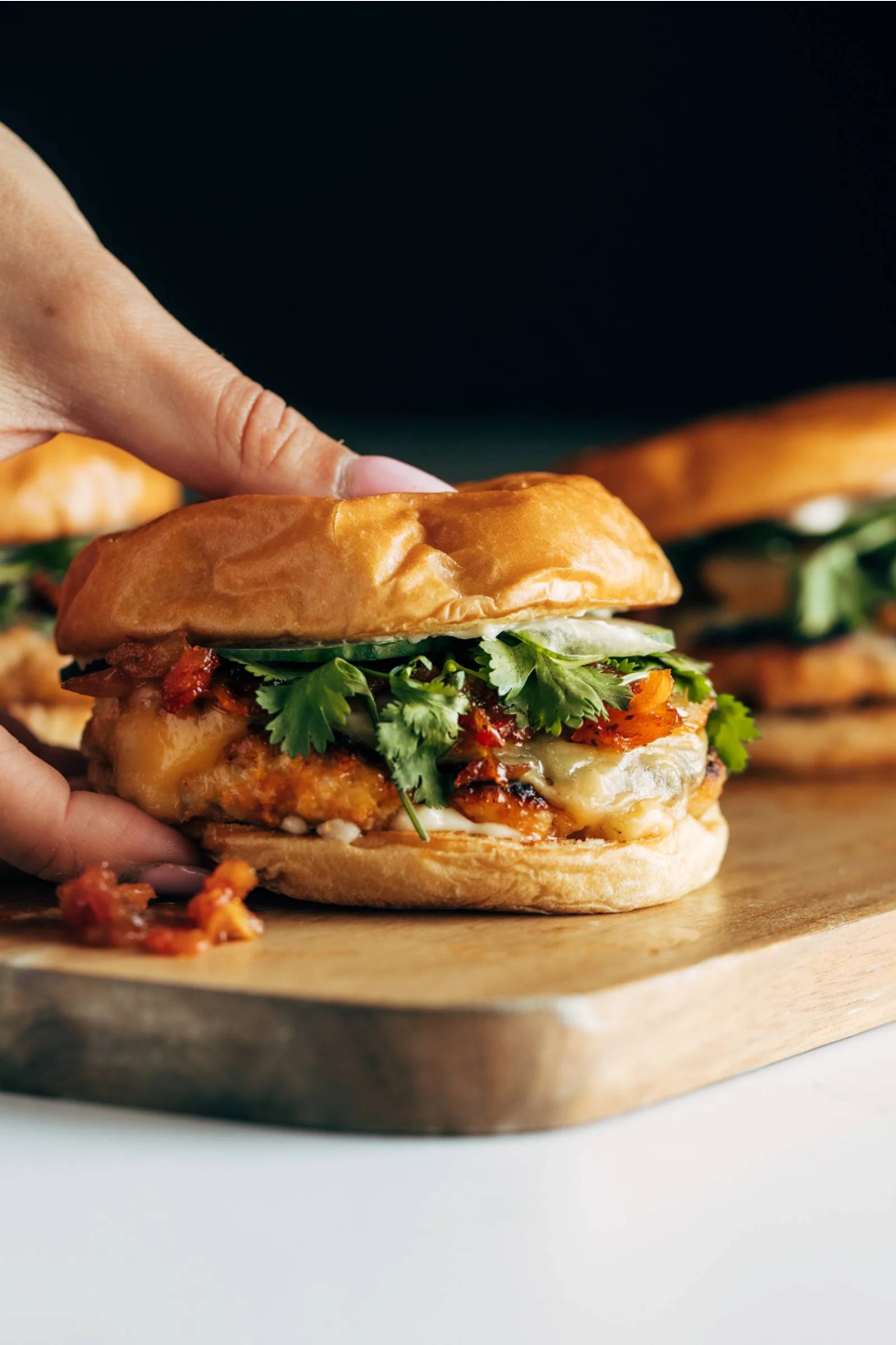
Some foods exist purely to shatter your preconceived notions of what a “burger” is. Not the greasy, heavy, and unpleasant experience that leaves you wanting to collapse on the sofa, but a lighter, more layered experience with a unique fermented depth and a smoky, homely feel.
The star of this dish is chicken, the supporting cast are kimchi and bacon, and the unsung hero is that bright red jar of Korean spicy sauce—gochujang. They come together not for some fusion gimmick, but because the flavors should be this way: salty, sweet, spicy, sour, and umami—all essential.
About That Jar of Red Spicy Sauce
If you don’t already have a jar of gochujang in your kitchen, you should buy some now. Don’t be fooled by its appearance—that deep red color looks intimidating, but its spiciness is actually mild and sweet, like a good-natured but opinionated friend. Made from glutinous rice, fermented soybeans, and chili powder, it undergoes a long fermentation process, resulting in a miso-like umami depth with a honey-like aftertaste.
Using it as a base for hamburger patties is far superior to simply using salt and pepper. Chicken itself has a mild flavor, requiring this complex seasoning to elevate it. Gochujang doesn’t turn the chicken into a fireball; instead, it coats it with a flavorful layer—when you bite into it, you first experience a subtle sweetness, followed by a slowly rising warmth, and finally, the indescribable “umami” from fermentation lingers on your tongue.
Kimchi Bacon Sauce: The Soul of This Dish
If gochujang is the mastermind behind the scenes, then the kimchi bacon sauce is the star in the spotlight. Its preparation is simple to the point of being almost crude, yet its flavor is as complex as a suspense novel.
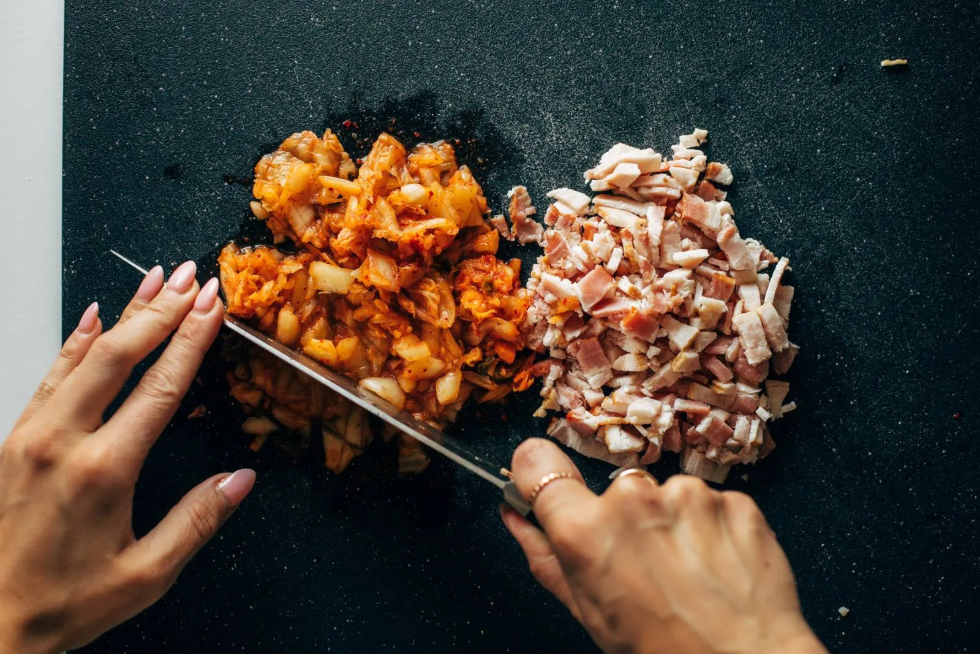
Take a few thick-cut strips of bacon, dice them, and slowly sauté them in a frying pan. Don’t rush, keep the heat at medium, allowing the fat to slowly render out, turning the meat from pink to golden brown, the edges slightly curling, releasing that irresistible smoky aroma. At this point, the kitchen is already filled with the domineering smell of bacon, but don’t stop, the real show is just beginning.
Add the kimchi. Not whole leaves, but finely shredded or diced, so it blends better with the bacon. The tangy kimchi and the bacon fat create a wonderful chemical reaction—the acidity cuts through the richness, the oil enhances the aroma, the two complementing and enhancing each other. Add a spoonful of brown sugar, not to sweeten it, but to help caramelize, coating the whole pot with a shiny sugar coating, turning it into that sticky, oily, somewhere between sauce and vegetables.
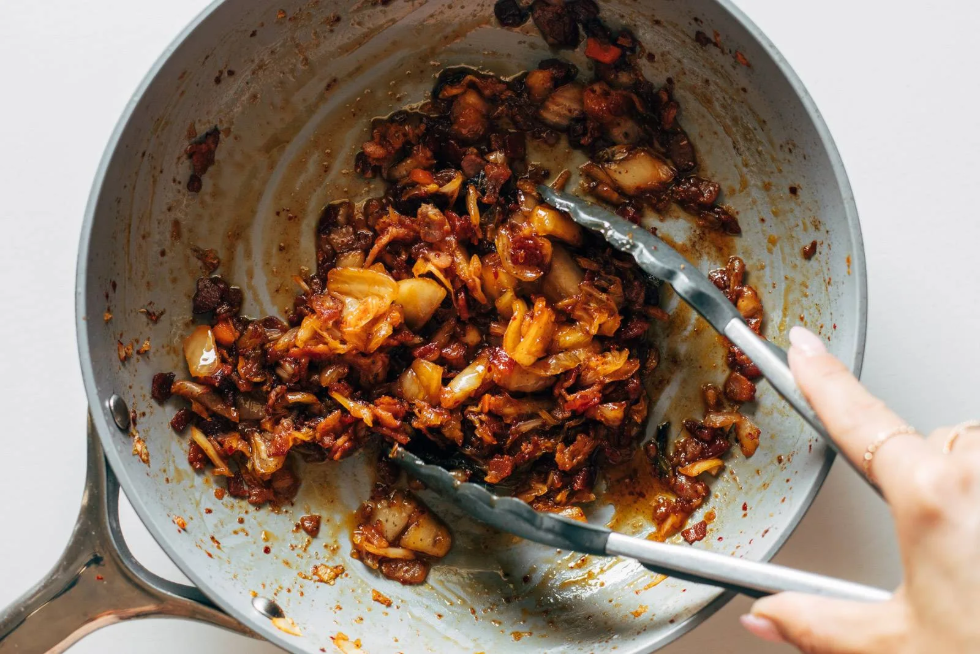
Stir-fry for three to five minutes, until large bubbles start to rise in the pot, the kimchi softens, and the color changes from bright orange-red to a deep ochre, then turn off the heat. At this point, the kimchi and bacon sauce smells smoky, slightly sour, and a little sweet; it looks glossy, thick, and clings to a spoon without immediately dripping; and when you eat it—you’ll want to just scoop it out with a spoon, and whether it’s a hamburger or not becomes irrelevant.
Chicken Patties: Understated Yet Indispensable
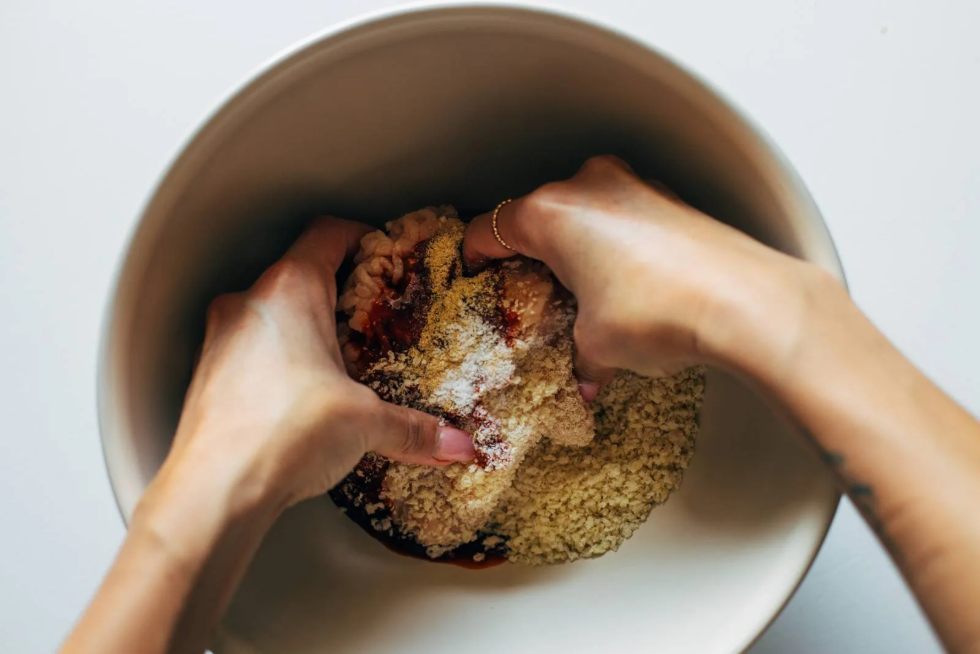
Making chicken patties is simple. One pound of ground chicken breast, two handfuls of breadcrumbs (panko is best, the Japanese kind, for a fluffier texture), two tablespoons of gochujang (a type of breadcrumb), half a tablespoon of garlic powder, and a pinch of salt. Mix well by hand, but don’t over-knead; over-kneading will make the meat tough. Divide into four or five portions, gently flatten them into patties, and press a small indentation in the center—this prevents them from puffing up during frying.
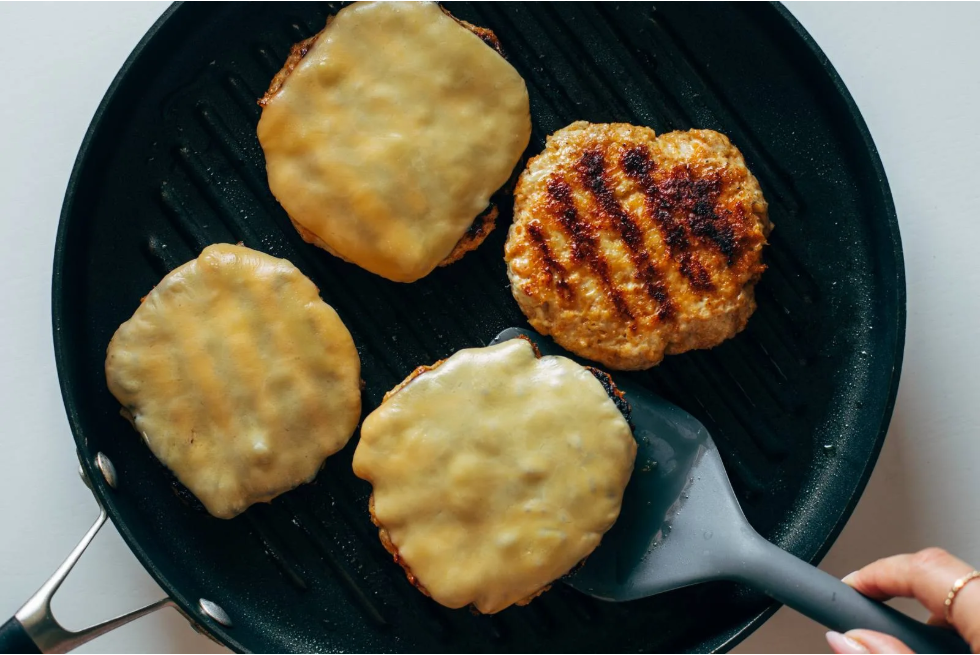
Fry in avocado oil or olive oil over medium-high heat for three to four minutes per side. Unlike beef, chicken cannot be eaten raw, so it needs to be fried until the internal temperature reaches 165 degrees Fahrenheit (approximately 74 degrees Celsius). The surface should be golden brown, even with a few charred spots, to bring out the aroma from the Maillard reaction. If you like cheese, after flipping the patty, place a slice of Gouda on top, cover, and simmer for one minute, allowing the cheese to melt into a golden blanket over the patty.
Gouda cheese isn’t just any cheese. It has a mild flavor with a nutty note, a moderate melting point—it won’t melt completely like cheddar, nor will it be as stringy as mozzarella. It rests quietly on the chicken, like a soft cushion, receiving the impending onslaught of the kimchi and bacon sauce.
Assembly: The Art of Layering
The assembly of a burger follows a specific order. This isn’t fuss; it’s a matter of both physics and taste.
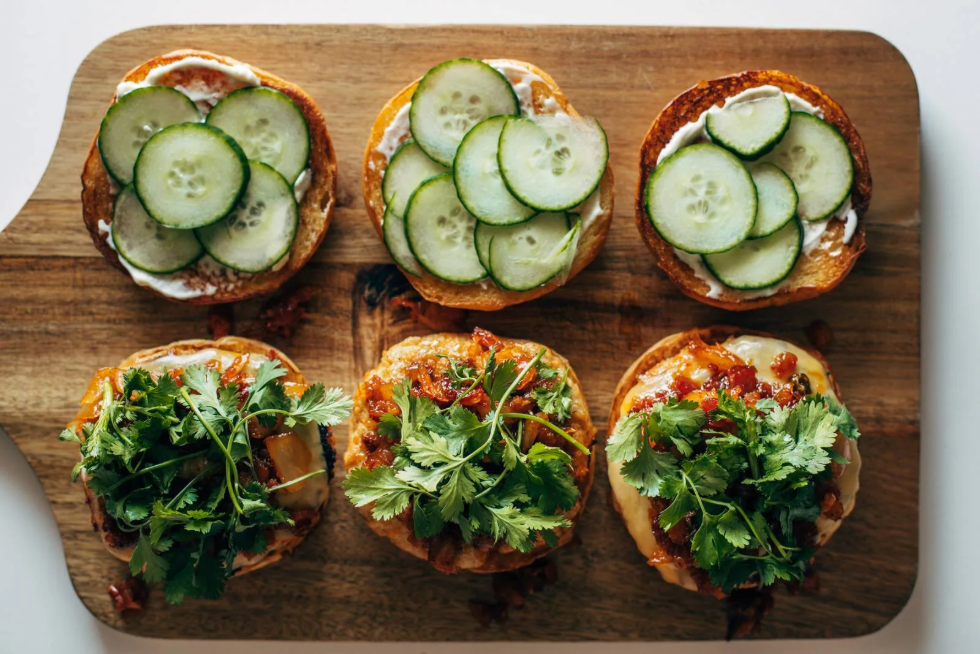
The bottom bun needs to be toasted. Not just lightly touched to the heat source, but toasted until crispy on the outside, still soft on the inside, and slightly charred at the edges. Spread mayonnaise—plain is fine; avoid garlic or spicy flavors, as they don’t need to steal the show here. The richness of the mayonnaise softens the subsequent tangy and spicy kick.
Then comes the chicken patty, with that half-melted Gouda cheese slice. Next, a generous spoonful of kimchi and bacon sauce—don’t skimp! A little sauce will drip down the edge of the patty; that’s the essence. Add a few thin slices of cucumber, skin on, for a crisp texture and refreshing moisture. Finally, a small bunch of cilantro—not for decoration, but essential—its herbal aroma elevates all the strong flavors, preventing the burger from becoming greasy.
Top with the bun, pressing it down slightly. Don’t press too hard, or you’ll squeeze the sauce out. At this point, the burger should be tall, full, and showcasing layers of color from the side: the golden bun, the white mayonnaise, the brown chicken, the yellow cheese, the deep red kimchi sauce, the vibrant green cucumber, and the bright green cilantro.
When eating
Use your hands. Don’t use a knife and fork; that’s sacrilege. A hamburger is meant to be held, your fingers able to feel the warmth of the bun, anticipate the angle at which the sauce will flow, and adjust the angle before biting in, ensuring every bite contains all the layers.
The first bite: your teeth pierce the crisp bun, then the creamy mayonnaise, followed by the warm chicken and melted cheese, and finally the concentrated explosion of the kimchi and bacon sauce—sour, sweet, spicy, salty, smoky—like a symphony of flavors, all the instruments playing simultaneously, yet you can clearly distinguish each sound. The crispness of the cucumber and the freshness of the cilantro interweave, like percussion and woodwind instruments, preventing the whole symphony from becoming too heavy.
You’ll want to close your eyes. Not as an exaggeration, but because your brain needs to concentrate all its resources to process this complex sensory information. Then you’ll involuntarily let out an “Mmm”—not a polite, social response, but a heartfelt, uncontrollable sound that rolls from deep within your throat.
Some Random Thoughts
The most captivating aspect of this dish is its ability to seamlessly blend two seemingly disparate cultural elements—the tangy, spicy flavor of Korean fermentation and the smoky, fatty texture of American bacon—into a harmonious whole. Kimchi isn’t just a garnish; it’s a key ingredient. Bacon isn’t optional; it forms the backbone of the sauce. Gochujang acts as a bridge, connecting them and giving the chicken a completely new character.
Regarding cheese, I know some might question: why put Hollandaise cheese in a Korean-style burger? But after trying it, you’ll understand. Gochujang’s mildness and nutty aroma perfectly balance the sharpness of the kimchi and the intensity of the chili sauce. It’s understated, but without it, the entire burger would lose its balance and become overly aggressive.
As for the cucumber and cilantro, their purpose is to encourage you to eat another burger. Without them, you’ll be tired of the first one; with them, you’ll find yourself unconsciously picking up a second one.
Cooking is sometimes like writing, sometimes like composing music. You need a theme (chicken), a variation (gochujang), a climax (kimchi and bacon sauce), an interlude (cucumber and cilantro), and finally, a lingering finish (the aftertaste of Gouda cheese).
This hot chicken burger isn’t the kind of dish that requires you to sit up straight with your knife and fork ready. It’s perfect for a Friday night in the kitchen, for a barbecue with friends, or for a weekday when you want something good but don’t want to go through too much trouble. It’s messy, flavorful, and unapologetic (no offense meant by its straightforward flavor).
If, after making it, you’re standing in the kitchen, holding a burger with sauce dripping down your hand, half-eaten food in your mouth, thinking, “This is so delicious,” then my mission is accomplished.
Preparation Time: Approx. 10 minutes
Cooking Time: Approx. 20 minutes
Serving Size: 4-5 hamburgers
Difficulty: Anyone can do it if you dare to turn on the stove
Ingredients:
- 1 pound (approx. 450g) ground chicken breast
- ½ cup Japanese breadcrumbs (panko)
- 2 tablespoons Korean chili paste (gochujang)
- ½ teaspoon garlic powder
- 1 teaspoon coarse salt
- Avocado oil or olive oil (as needed, for frying the patties)
- 6 thick-cut bacon slices
- 1.5 cups Korean kimchi (finely shredded)
- 2 tablespoons brown sugar
- 4-5 hamburger buns
- Gouda cheese slices (optional, but highly recommended)
- Mayonnaise (as needed)
- 1 cucumber (thinly sliced)
- A small bunch of cilantro
Instructions:
- Make the kimchi and bacon sauce: Dice the bacon and sauté over medium heat until golden brown and the fat renders. Add shredded kimchi and brown sugar, and sauté for 3-5 minutes until thickened and caramelized.
- Mix the ground chicken with breadcrumbs, gochujang (a type of savory gravy), garlic powder, and salt. Gently knead into 4-5 patties.
- Pan-fry the patties over medium-high heat for 3-4 minutes per side until the internal temperature reaches 165°F. Flip them over, add Gouda cheese slices, cover, and simmer until melted.
- Toast a slice of bread in half until crispy. Spread mayonnaise on the bread, then layer the patties, kimchi and bacon sauce, cucumber slices, and cilantro. Top with the sauce.
- Find a quiet place to enjoy alone, or find a friend and share the sauce on your elbows.