Foreword
Some foods exist to subvert, not to improve. The burger bowl is one such thing—it takes a burger apart, removes the bun, breaks up the patty, and rearranges all the familiar elements, putting them all into a bowl. It sounds like a product of some food trend, like those marketing slogans for “low-carb” and “lighter meals.” But the moment you actually make one and stick your fork in, you’ll understand: this isn’t subtraction, it’s addition. Removing the bun actually allows you to eat more.
About the Absence of Bread
I’m not the kind of person who’s hostile to bread. A perfectly toasted burger bun, crispy on the outside and soft on the inside, with the aroma of butter and charcoal, is a work of art in itself. But sometimes, bread takes up too much space. It’s like a sponge, absorbing the sauce, filling your stomach, and making you feel sluggish with fullness by the third bite.
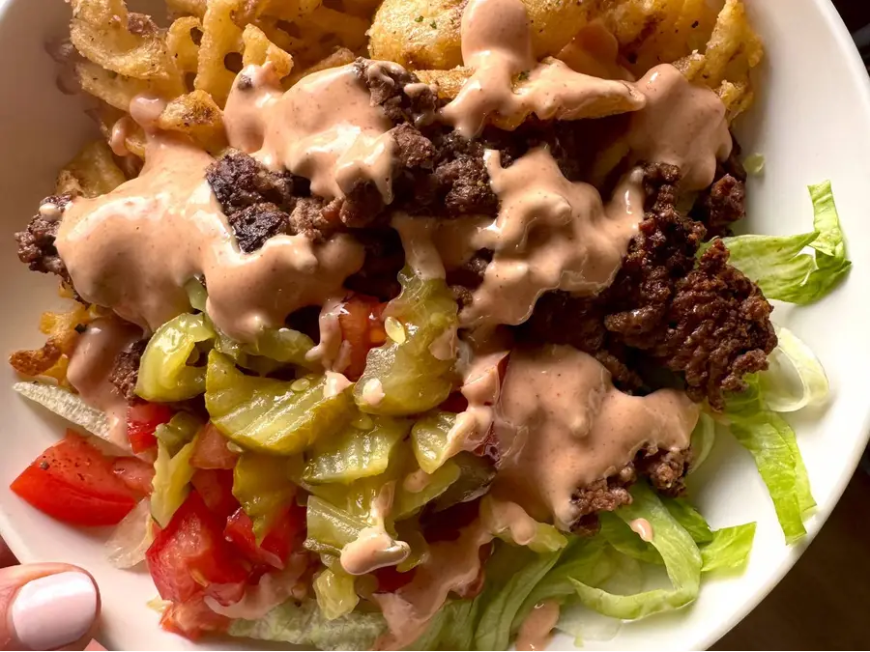
Remove the bun, and the space in the bowl suddenly becomes generous. You can fit more fries—yes, fries, not just a side dish, but one of the main ingredients. You can add a thicker layer of lettuce, pile on more diced tomatoes, and sprinkle on more pickle slices. Every spoonful is packed with substantial filling, without that disappointment of biting into a half-eaten bun.
And, honestly, there’s a strange sense of liberation in eating a burger with a fork. You no longer need to hold it carefully, worrying about the sauce spilling from the sides or the filling squeezing out the back when you bite into it. The bowl is stable, inclusive, and won’t betray you. You can eat while watching TV, type while eating, or even eat standing up—unthinkable in the era of traditional burgers.
Ranch Fries: The Foundation of This Dish
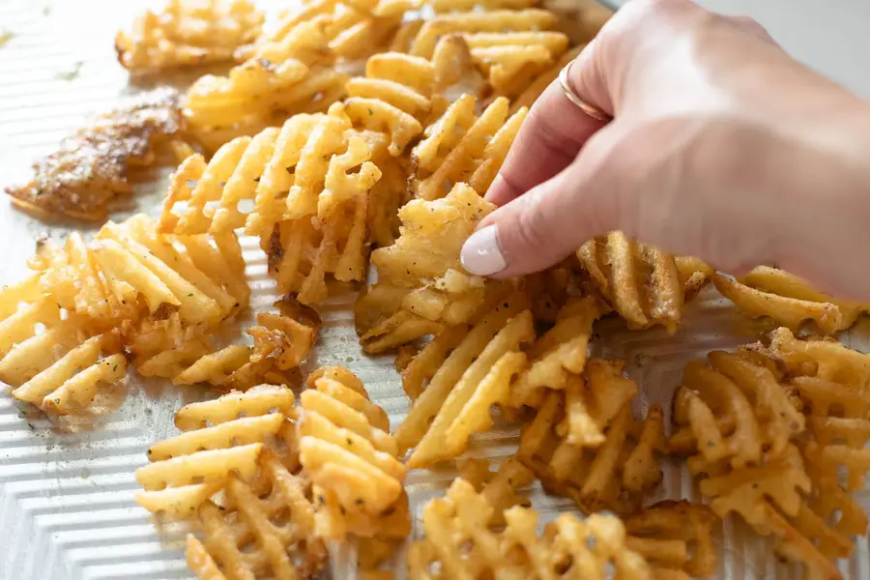
Fries here aren’t a side dish, they’re the foundation. Not those thin, pencil-lead-like fast food fries, but thick, textured, frozen waffle fries—those crisscrossed, uneven surfaces that can hold more.
The method is so simple it’s almost perfunctory: Lay frozen fries on a baking sheet and bake according to package directions until golden brown and crispy. Then comes the crucial step—toss a few chunks of butter on top while they’re still hot. Not melted and poured over, but simply dropped cold butter directly onto the hot fries, letting it melt slowly on its own. The butter will seep into the lines of the fries, coating each one with a thin, glossy sheen.
Now sprinkle on ranch seasoning. Ranch seasoning, that powder you might have glimpsed on the supermarket spice shelf but never really looked at closely, is mainly composed of buttermilk powder, onion powder, garlic powder, dill, and some salt. But sprinkled on butter-soaked fries, it undergoes a transformation—from a pile of seasoning powder into a distinctive, creamy, slightly tart, irresistible magical powder that makes you want to keep eating one after another.
You don’t need precise measurements. Add more if you like it rich, less if you prefer it mild. The beauty of ranch seasoning is that it’s hard to overdo it—the flavor is mild, friendly, and won’t suddenly overpower you. You can sprinkle it in and taste until you find that perfect balance.
Beef: Large Chunks, Brown, Juicy
The way the beef is prepared is what sets this dish apart from traditional burgers. Instead of pressing it into patties, it’s placed directly into the pan as ground beef, searing it over high heat to create large, browned chunks.
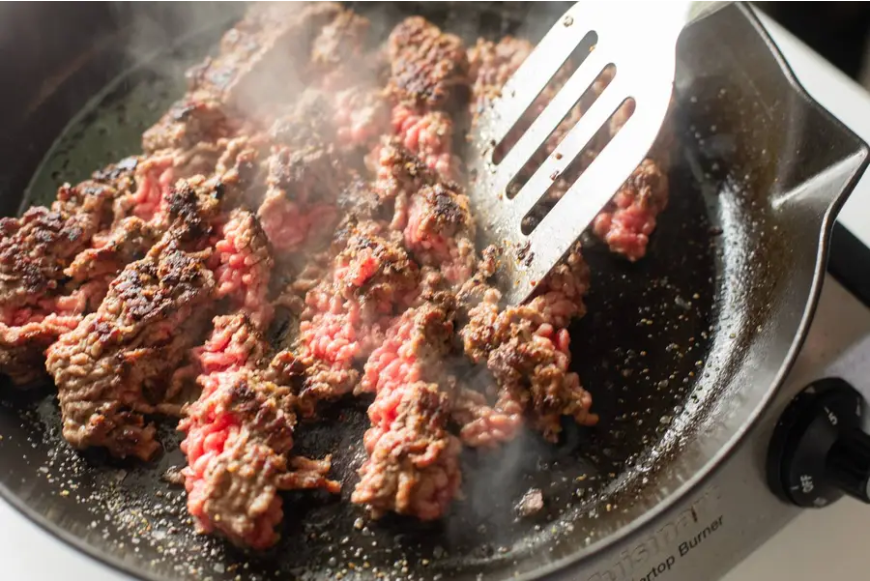
Cast iron skillet, empty, high heat until smoking. Don’t add oil—85/15 beef already has enough fat, which will render out on its own in the hot pan. Pour the ground beef in directly, without stirring immediately. These are the most agonizing minutes as you watch the meat smoke, shrink, and begin to darken at the edges, instinctively wanting to flip it with a spatula. Resist. Let the meat sit quietly, allowing the Maillard reaction time to occur. The piece of meat, pressed against the bottom of the pan, is forming a caramelized crust—the concentrated flavor, the soul of the entire dish.
After a few minutes, flip it over. Not all at once, but in large chunks, so the other side also touches the hot pan. Then, use a spatula to roughly break it up—not into minced meat, but into fork-sized pieces. Too big, and it’s hard to eat; too small, and it’ll be dry. Those irregular, varying pieces are ideal. Some have crispy edges, others remain pink inside, creating a unique texture with every bite.
Season with hamburger seasoning, or simply salt and black pepper. Sprinkle a teaspoon on each side; while the meat is still hot, the seasoning will adhere to the surface instead of sinking to the bottom as a burnt residue. Cook until the outside is caramelized and the inside is still slightly pink, then remove from the pan. Don’t cook it well-done—the other ingredients in the bowl will keep it warm, and the residual heat will continue to cook it inside, so when you eat it, it will be perfectly cooked but still juicy.
Secret Sauce: The Binding Agent in the Bowl
The sauce is the secret weapon of this dish, the matchmaker that brings these independent ingredients together. It’s not as flamboyant as ketchup, nor as bland as mayonnaise, but something in between, something with its own character.
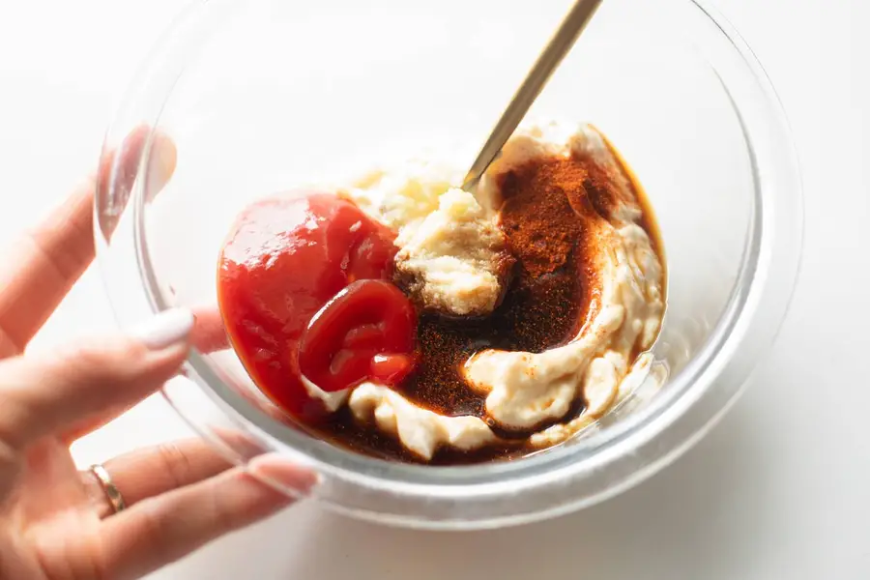
Half a cup of mayonnaise as a base, two tablespoons of ketchup for color, a teaspoon of horseradish sauce for a kick, a teaspoon of Worcestershire sauce for umami depth, half a teaspoon of smoked paprika for color and a touch of smokiness, and finally, a clove of minced garlic—don’t use garlic powder; the spiciness and aroma of fresh garlic are irreplaceable.
Place them in a small bowl and whisk until smooth. At first, the color might seem a bit odd—not pure white, nor pure red, but an ambiguous orange-pink somewhere in between. But one taste reveals: first the creamy smoothness of the mayonnaise, then the sweet and sour flavor of the ketchup, followed by the pungent kick of horseradish that bursts from your nose, and finally, the savory umami of Worcestershire sauce and the warmth of smoked paprika lingering on the back of your tongue.
The beauty of this sauce lies in its versatility. Drizzled over beef, it moistens the meat; dipped in fries, it elevates them from a snack to a main dish; mixed with lettuce, it transforms vegetables into more than just filling. You can put it in a squeeze bottle and drizzle it in a circular motion over the bowl, or simply scoop a large spoonful into the center and mix it yourself when eating.
Assembly: No Rules, Only Preferences
The bowl’s assembly has no fixed order, but there is logic. The bottom layer is usually lettuce—shredded lettuce, the kind cut into thin strips, not whole leaves. Whole lettuce leaves are too large to handle with a fork; finely shredded lettuce can intertwine with other ingredients, ensuring its presence in every bite.
Then come the fries, layered on top of the lettuce like a golden mattress. Next comes the ground beef, generously sprinkled on top. Then come the diced tomatoes and pickles—cut into small pieces, not sliced; sliced tomatoes will release water, turning the bottom of the bowl into soup; diced tomatoes retain their shape, bursting with juice in every bite. Use the kind of pickles for hamburgers, the sweet and sour kind, thinly sliced or diced, providing that invigorating tang.
Finally, drizzle the sauce. Starting from the center, create a spiral outwards, allowing the sauce to flow naturally into the crevices. Don’t pour too much at once; add as you eat. The charm of this bowl lies in this gradual, adjustable eating experience.
If you like cheese, place a slice of cheddar or American cheese on top of the beef before it’s done cooking, cover and simmer for ten seconds to partially melt the cheese, then pour it into the bowl along with the meat. The stringy, stretchy texture makes the whole bowl look more appealing and adds a layer of creamy richness to the flavor.
How to Eat
Use a fork. Don’t use a spoon; a spoon will mix the sauce and ingredients into a mushy mess. A fork allows you to precisely pick up the combination you want—a piece of meat, a few fries, some lettuce, a slice of pickle—then dip it in the sauce at the bottom of the bowl and put it in your mouth.
The first bite is usually chaotic because you haven’t figured out the proportions yet. Maybe there’s too much meat, maybe the fries are too salty, maybe there’s not enough sauce. But by the third or fourth bite, you’ll find your rhythm. You’ll start intentionally forking the fries and beef together, letting the ranch seasoning and secret sauce meet in your mouth; you’ll start dipping the lettuce in the sauce at the bottom of the bowl and find it tastes ten times better than usual; you’ll start anticipating every bite of the pickle, because that tangy kick is the breath of fresh air for the whole bowl—without it, you’ll be suffocated by the rich flavors.
By the time you’re halfway through, the contents of the bowl will start to mix. The fries broke, the beef crumbled, the tomatoes released their juices, and the sauce sank to the bottom. This isn’t a bad thing; it’s the best part. The second half of the bowl offers a completely new experience—everything has permeated each other, the flavors more complex and integrated than the first half. You’re no longer eating “beef” or “fries”; you’re eating a collective that has reached a consensus.
Some Random Thoughts
The smartest thing about this dish is that it liberates the concept of a “hamburger” from the physical form of a sandwich. The core of a hamburger isn’t just meat in a bun, but the combination of flavors: the smoky aroma of the meat, the crispness of the vegetables, the richness of the sauce, and the tangy flavor of the pickles. As long as these elements are present, whether it’s sandwiched in a bun or not is irrelevant.
Regarding Ranch Seasoning, I know some people might think using packaged seasoning is cheating. But sometimes cheating is acceptable. Ranch seasoning is a well-established flavor formula; it knows what it’s doing. You can certainly make it yourself—buttermilk powder, onion powder, garlic powder, dill, salt, mixed in the right proportions—but the result won’t be much better than the packaged version, and you’ll end up washing three more dishes. Efficiency in the kitchen is a virtue.
As for the horseradish sauce in the secret recipe, don’t omit it. It’s a tiny amount, a teaspoon, but its presence is strong. That burst of flavor that rises from your nose transforms the whole dish from “delicious” to “memorable.” Without it, the sauce is just another Thousand Island dressing; with it, it has character.
Finally, about cast iron pans. If you don’t have one, a nonstick pan will do, but the results won’t be as good. The nonstick coating limits the temperature, making it difficult to achieve the characteristic deep brown, almost charred, characteristic of cast iron. But then again, if you’re just making dinner, not competing in a cooking contest, a nonstick pan is perfectly adequate. The important thing is to sear the meat until it’s browned, not boil it.