Foreword
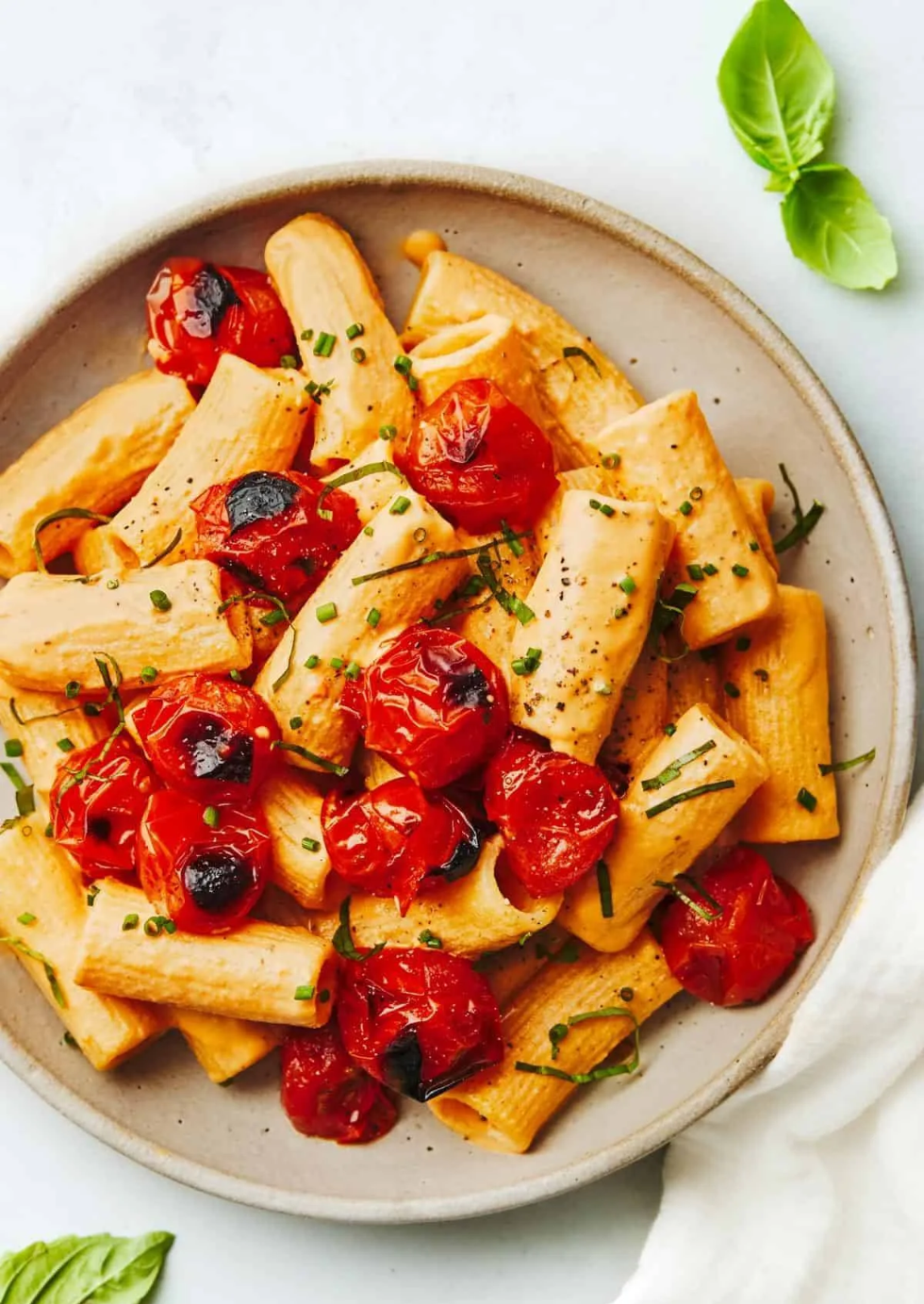
Some dishes are summer’s gifts, requiring little effort yet offering the most rewarding results. This red pepper creamy pasta is one such dish—it looks like the kind of elegantly presented dish you’d find in a fine restaurant, but its creation is actually incredibly simple, almost homey: a handful of cashews, a jar of roasted red peppers, a few cherry tomatoes, and a blender. Thirty minutes later, you’re sitting at the table with a bowl of steaming, orange-red pasta, the cicadas still chirping outside, the fan still whirring, and you’ve already enjoyed the most comforting meal of summer.
Its most captivating aspect is its “creamy” texture—not from cream, not from cheese, but from cashews. This might sound like a compromise to vegetarianism, but after the first bite, you’ll understand: this isn’t a substitute, it’s a discovery.
The Magic of Cashews
In this dish, cashews play a role similar to that of heavy cream and butter in a traditional cream sauce. But cashews are smarter—they possess a natural sweetness and oiliness, resulting in a sauce that is both creamy and has a comforting nutty aroma. Moreover, they don’t make the sauce greasy. You can eat a whole bowl and still feel light in your stomach, unlike after eating Alfredo, when you feel like a weight is pressing down on your stomach.
Raw cashews need to be soaked beforehand, at least four hours, preferably overnight. After soaking, the cashews will swell, soften, and their skin will wrinkle slightly, like pebbles soaked in water. Then, throw them into a blender, add water, roasted red peppers, olive oil, and a clove of garlic, and blend on high speed for two minutes. The resulting sauce will be as thick as melted ice cream, with a warm orange-red color—not a glaring, artificial orange-red, but a warm, earthy hue naturally formed from the combination of roasted red peppers and cashews.
Nutritional yeast is optional, but I recommend not omitting it. It’s not yeast, but a type of deactivated yeast tablet with a subtle cheese and umami flavor. Adding two tablespoons of nutritional yeast instantly elevates the sauce’s complexity—it transforms it from “delicious” to “so good you’ll want to lick the plate clean.” If you can’t find nutritional yeast, you can substitute a pinch of Parmesan cheese powder, although that will make it less vegan, but still very tasty.
Roasted Red Peppers: The Backbone of the Sauce
Roasted red peppers are the soul of this dish. Not raw red peppers, but roasted—the kind with a charred skin, soft flesh, and a smoky flavor. You can roast them yourself: roast the red peppers directly over an open flame, or use the broil setting in your oven until the skin blisters and turns black, then place them in a sealed bag for ten minutes to allow the steam to separate the skin from the flesh. Peel off the charred skin and remove the flesh. But honestly, in this busy era, buying a good can of roasted red bell peppers is perfectly reasonable. A good can of roasted red bell peppers has already done all the tedious steps for you; you just need to open the lid and pour the pulp into a blender.
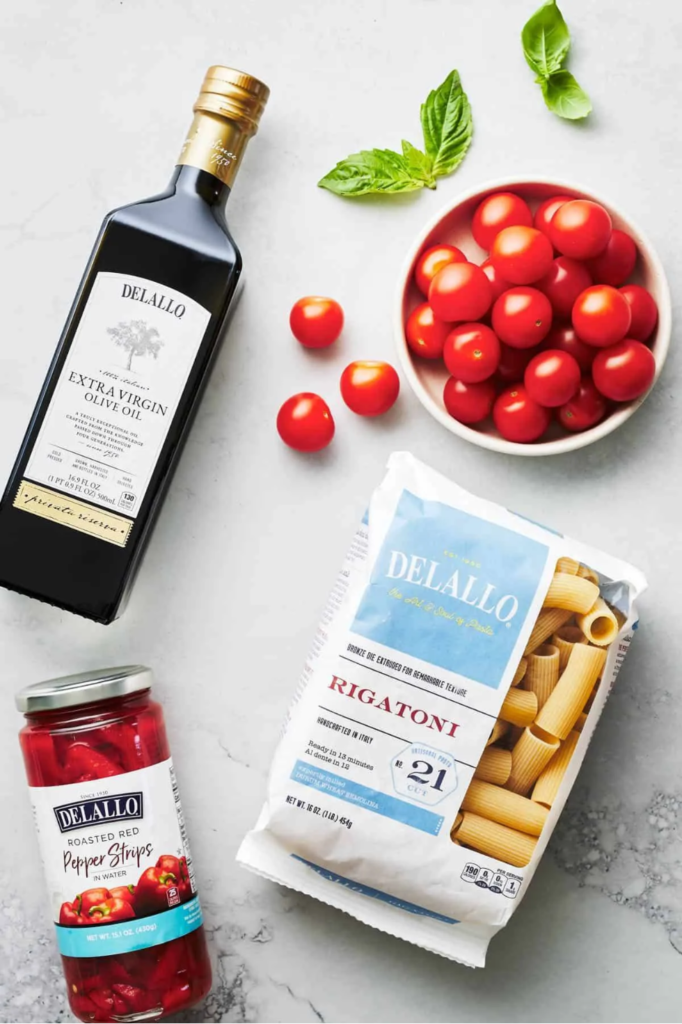
Roasted red bell peppers bring three things to a sauce: color, sweetness, and depth. Raw red bell peppers are crisp, spicy, and grassy; roasted red bell peppers are soft, sweet, and have a complex aroma of smoke and caramelization. It’s not the main character in the sauce—the creaminess of the cashews is—but it’s the element that gives the sauce “personality.” Without it, the sauce is just another nut sauce; with it, the sauce has a story.
I usually use a whole large roasted red bell pepper, or half a cup of roasted red bell pepper strips. Don’t overdo it—too much red bell pepper will make the sauce too sweet and too thin, losing that rich, coating texture. It should be a background color, not a foreground color.
Bursting Cherry Tomatoes: Fireworks in a Bowl
Cherry tomatoes here aren’t part of the sauce, they’re a topping, the “fireworks” that add a touch of smokiness to the whole bowl of pasta.
The method is so simple it doesn’t need a recipe: Two or three cups of cherry tomatoes, halved (or whole if you’re too lazy to cut them), arranged on a baking sheet, drizzled with a spoonful of olive oil, sprinkled with salt and black pepper, and baked in the broiler for ten to fifteen minutes. You’ll hear them popping softly in the oven—”pop,” “pop,” “pop”—like a mini fireworks display. Their skins will wrinkle, bubble, and char in parts, while the flesh softens, releases juice, and thickens into a caramel-sweet, almost jam-like texture.
When they come out of the oven, the cherry tomatoes are no longer the same. They’ve become flat, shiny, and their color has changed from bright red to deep red or even close to brownish-red. Some had already burst open, their juices flowing onto the baking sheet, mixing with the olive oil to form a layer of tomato-scented oil. At this moment, the kitchen was filled with a warm, slightly smoky, irresistible aroma—the smell of summer, the smell of sunshine concentrated in tiny fruits.
On pasta, these cherry tomatoes serve multiple purposes. They provide a contrast in texture—the sauce is creamy and smooth, while the cherry tomatoes are juicy and grainy. They provide layers of flavor—the sauce is rich and nutty, while the cherry tomatoes are sweet and sour, with a hint of smokiness. They also provide a visual highlight—the orange-red sauce dotted with deep red cherry tomatoes, like a few rubies sprinkled on a warm-toned oil painting.
Pasta Selection: Tubes are the Best Container
The shape of the pasta is important. Not every type of pasta is suitable for this thick sauce. Thin pasta like angel hair pasta or lasagna is too thin and won’t hold the sauce; long pasta like spaghetti will cause the sauce to sink to the bottom of the bowl, leaving the pasta itself bland. The best choice is tubular, textured, hollow pasta—such as rigatoni or penne.
Rigatoni is the ideal choice. Its tube diameter is wide enough, and its textured inner wall helps it hold the sauce; its length is just right, perfect for one bite without needing to twist or cut; its ends are cut flat, allowing the sauce to flow into the tube, squeezing out with each bite and entering the mouth along with the pasta. This “sauce-filled” effect is unmatched by other shapes.
When cooking pasta, use plenty of water and salt. A large pot of water, at least five quarts, with a handful of coarse salt—the water should taste like seawater. Once the water boils, add the pasta and cook according to the package instructions, but ideally, remove it a minute before the recommended time. Because the sauce is poured over and stirred onto the hot pasta, the residual heat will continue to cook the noodles. If cooked through, the pasta will become too soft. The ideal texture is al dente—chewy, resilient, and with a slightly firm center.
Assembly: The Encounter of Hot Pasta and Cold Sauce
A key detail in assembling this dish is that the sauce is cold (or at room temperature), and the pasta is hot. Do not pour the sauce into a pot to heat it—cashew paste will overheat, separate, become oily, and lose its shine. The correct method is: after cooking the pasta, drain it and place it directly into a large bowl (do not leave it in the pot, as the heat at the bottom will continue to cook the pasta), then pour the prepared cold sauce over it and stir quickly.
The hot pasta warms the cold sauce, making its texture more fluid and easier to coat each strand of pasta. As you stir, you will see the sauce transform from a thick paste into a smooth, glossy coating, enveloping each strand of rigatoni. At this point, the pasta should look moist and glossy, but not soaked in the sauce—the sauce should cling to the pasta, not sink to the bottom of the bowl.
Then, top with the roasted, bursting cherry tomatoes. Don’t stir—let them remain separate, as a surprise with every bite. Finally, sprinkle with a handful of chopped chives and fresh basil leaves. The chives provide the spiciness of onions and a touch of crunch, while the basil offers herbal freshness and a visual green accent. They are the final garnish, the signature of the entire bowl of pasta.
How to Eat
Use a fork. Starting from the rim of the bowl, fork up a rigatoni coated in sauce, topped with a bursting cherry tomato and a basil leaf. Put it in your mouth, first biting into the cherry tomato—”pop!”—the warm tomato juice bursts in your mouth, the sweet and sour juice mixing with the rich cashew sauce. Then chew the pasta, feeling the friction of the rigatoni’s textured surface, contrasting with the creamy sauce.
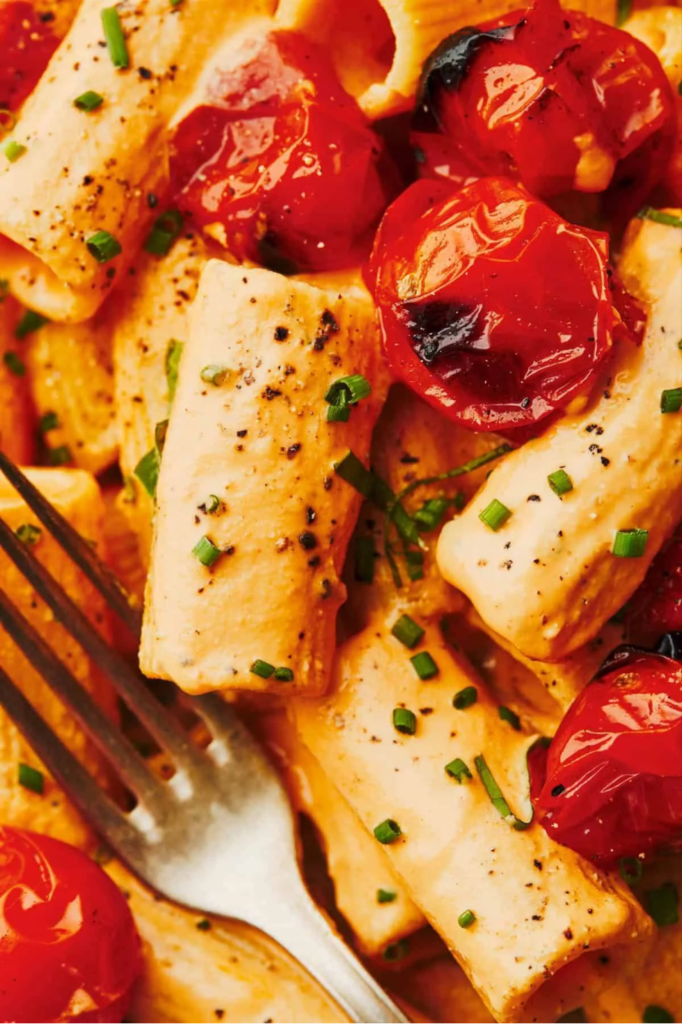
Middlely, the ingredients in the bowl begin to meld. Cherry tomato juice seeps into the sauce, making the already thick sauce more moist and juicy; the aroma of basil is brought out by the hot pasta, transforming from a garnish into a flavorful element; the spiciness of chives swirls in your nose, reminding you that this dish isn’t just sweet and rich, but also sharp.
The last few bites are usually the best. At the bottom of the bowl lies the essence of all the flavors—the sauce, tomato juice, basil oil, and the pasta’s starch. Scrape it up with a fork—it’s a concentrated, unreserved, blindingly delicious experience. You’ll want to lick the bowl clean, but restrain yourself—save a little for the next meal.
I make this dish at the end of summer. It’s not because it’s summer-only—you can actually make it year-round—but because at the tail end of summer, cherry tomatoes are at their most flavorful, the sun is at its strongest, and I don’t want to spend too much time in the kitchen. This dish only takes thirty minutes, twenty of which are done by the oven; you only need to stand in front of the blender for two minutes and the stove for five.
When you sit at the table with your bowl, your fork adorned with orange-red sauce and deep red cherry tomatoes, and perhaps the last cicadas are chirping outside, you’ll remember that afternoon when you decided to use cashews instead of cream. Back then, you thought it was just a vegetarian compromise. Now you know it’s something better—it’s a discovery, a reinterpretation of the possibilities of ingredients, the simplest and most profound magic in the kitchen.
And it’s truly delicious. So delicious you’ll forget it’s vegan. So delicious you’ll want to make it again and again.
Preparation Time: Approx. 10 minutes
Cooking Time: Approx. 20 minutes
Total Time: Approx. 30 minutes
Servings: 4-6 people
Difficulty: Can be made with any blender
What You Need:
Pasta:
- 1 lb (approx. 450g) Rigatoni
Sauce:
- 1 1/4 cups raw cashews (soaked for at least 4 hours, preferably overnight)
- 1/4 cup extra virgin olive oil
- 1.5 cups water
- 1 large roasted red bell pepper (or 1/2 cup roasted red bell pepper strips)
- 1 clove garlic
- 2 tbsp nutritional yeast (optional but highly recommended)
- 1.5 tsp salt
Burning Cherry Tomatoes:
- 2-3 cups cherry tomatoes
- 1 tbsp olive oil
- Salt to taste
- Black pepper As needed
Garnish:
- Chopped chives (as needed)
- Fresh basil leaves (as needed, torn or chopped)
Summary of Instructions:
- Soak Cashews: Soak raw cashews for at least 4 hours (or overnight), then drain.
- Roast Cherry Tomatoes: Preheat oven to broiler. Arrange cherry tomatoes on a baking sheet, drizzle with olive oil, sprinkle with salt and black pepper, and roast for 10-15 minutes until the skin is bubbly and charred, and the flesh is soft and bursting, turning once halfway through.
- Cook Pasta: Bring a large pot of water to a boil (at least 5 quarts), add plenty of coarse salt, and cook rigatoni according to package directions until al dente (remove 1 minute before the recommended time), then drain.
- Make the Sauce: Combine the soaked cashews, olive oil, water, roasted red bell pepper, garlic, nutritional yeast, and salt in a high-speed blender and blend until very smooth and thick (about 1-2 minutes). 5. Assemble: Pour the hot pasta into a large bowl, pour in the cold sauce, and quickly stir to coat each strand. Top with roasted, bursting cherry tomatoes, and sprinkle with finely chopped chives and fresh basil.
- Pick up your bowl, find a sunny spot, and enjoy your meal. Don’t rush; this dish deserves your time.
Tips:
- Do not heat the sauce; simply pour it over the hot pasta and stir. Heating will cause the cashew butter to separate into oils.
- When reheating leftovers, add a spoonful of water or vegetable broth and heat slowly in a saucepan over low heat, stirring constantly. Do not use a microwave.
- If you don’t have a broiler, bake in the oven at the highest temperature (450°F/230°C) for 20 minutes, or dry-fry the cherry tomatoes in a saucepan.