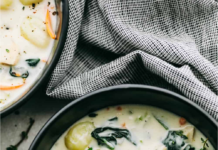
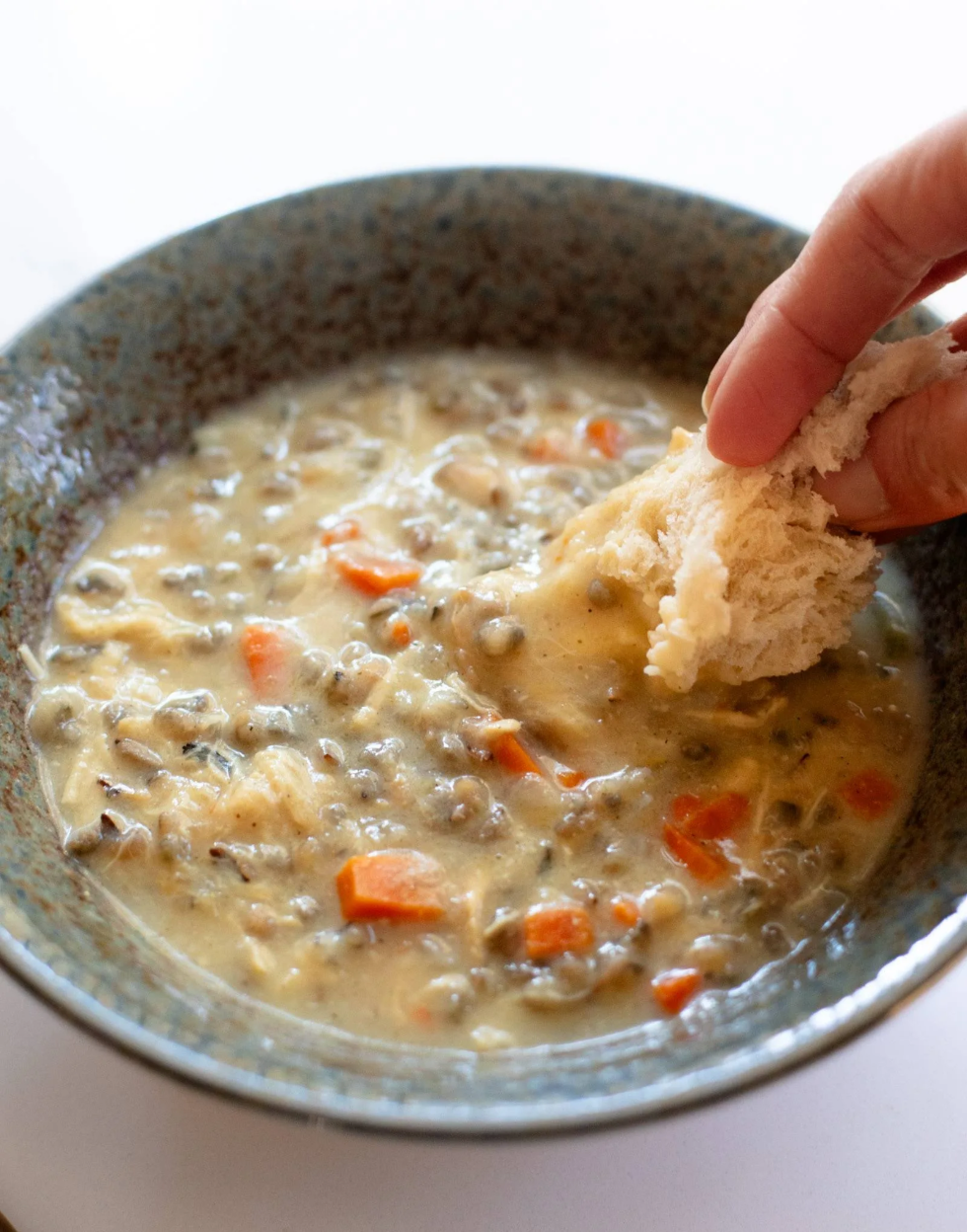
Some foods are products of time. Not the kind you can serve after standing at the stove for twenty minutes, but the kind where you put the ingredients in, put the lid on, and walk away to do something else. This slow-cooked wild rice chicken soup is like that—it doesn’t require you to stand by the stove, control the subtle changes in heat, or even make any decisions during cooking. You simply put the ingredients in the slow cooker in the morning, set the time, and go to work. When you return in the evening, the whole house is filled with a warm, nutty, and irresistible aroma. You open the lid and see a thick, milky-white soup, with black wild rice grains scattered like stars, and the chicken so tender that it falls apart with a gentle touch of a fork.
This isn’t a dish that requires skill. It requires patience and a slow cooker.
About Wild Rice: A Black Grain of Stubbornness
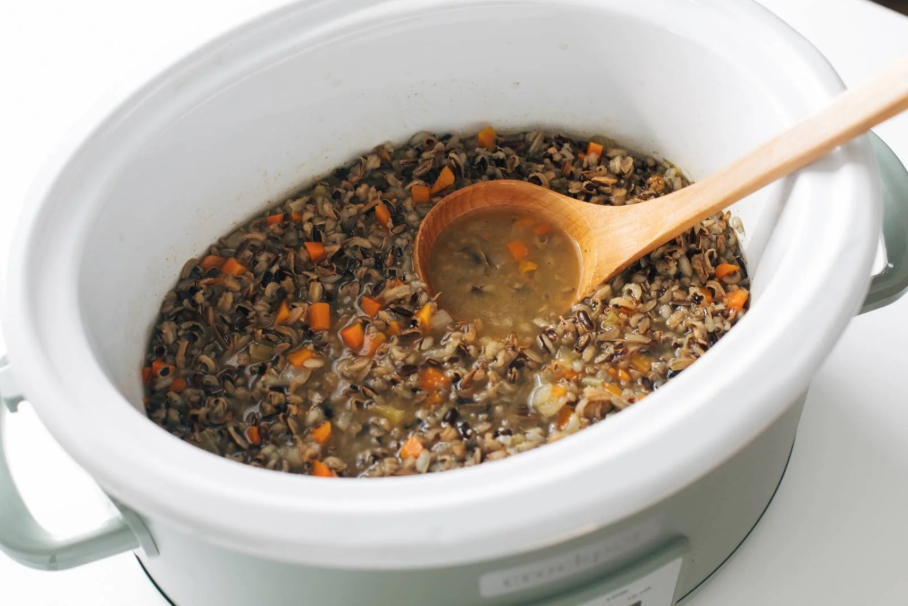
Wild rice is not rice. This is something many people don’t know. It’s the seed of a type of aquatic grass that grows in North America, scientifically called Zizania. It’s a distant relative of rice, but not the same thing. Its grains are long and slender, dark black in color, and when cooked, they split open to reveal the white germ inside, resembling tiny, cracked seeds. This cracking isn’t a sign of spoilage, but rather a sign of the wild rice’s maturity—only wild rice that has split open is fully cooked, chewy, and possesses that unique nutty aroma.
The texture of the wild rice is the backbone of this soup. It’s not the soft, melt-in-your-mouth kind of white rice, but rather a resilient grain that requires chewing, with a distinct presence in every bite. After simmering in the soup for six hours, the outer layer softens, but the center retains a slight firmness, like a stubborn old man—gentle on the outside, yet still holding firm to his principles. This texture transforms the soup from “a bowl of soup” into “a bowl of soup with something to chew on,” offering surprises and variations with every sip.
It’s essential to use real wild rice, not wild rice blends. Blended rice usually contains white rice, brown rice, or other grains, and will become mushy (pasty) if cooked for too long, losing the unique chewiness and aroma of wild rice. Real wild rice is pure, black, and has a slightly earthy flavor. You can buy it at health food stores or online; although it’s a bit more expensive than regular rice, it’s irreplaceable in this soup.
Chicken: The Power of Tenderness
The chicken used is boneless chicken breast, not chicken thigh—while thigh meat has fat and is more resistant to overcooking, it will become too mushy and fall apart in this six-hour simmering soup, losing its meaty texture. Although chicken breast is lean, under the slow cooker’s low temperature and long cooking time, it becomes tender and juicy, the fibers loosening until it can be easily separated with a fork.
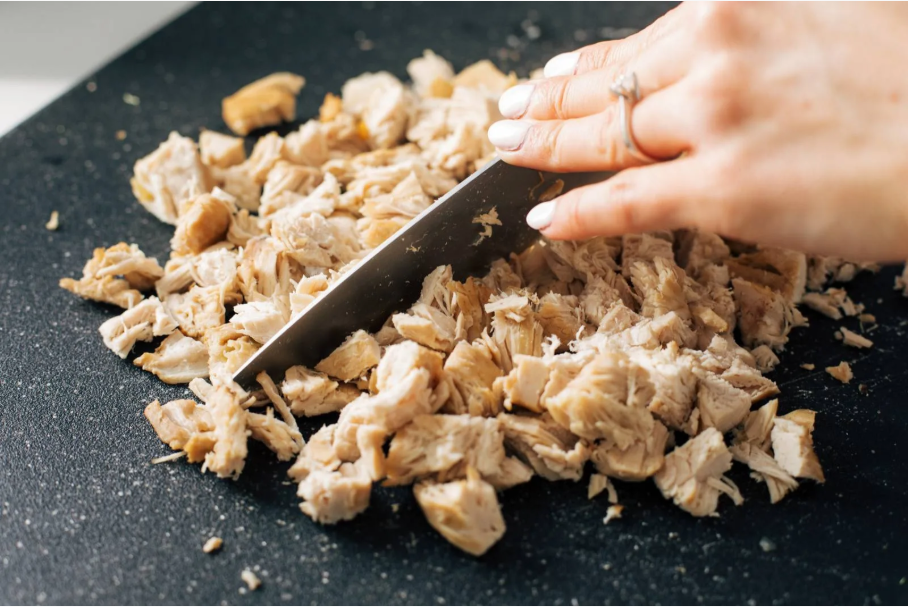
One pound of chicken breast, about two pieces, is placed directly at the bottom of the slow cooker. Don’t cut or marinate; just put the whole piece in. The slow cooker’s low temperature will allow it to slowly cook from the outside in, rather than searing it at high temperatures and leaving the inside raw. After six hours, take the chicken out, place it on a cutting board, and gently separate it with two forks—the meat will fall apart like a fluffy cloud. This tearing process is satisfying; you’ll see the fibers separate, the juices seep out from the breaks, and each piece of meat retains its individual shape, not like minced meat.
If you’re worried about the chicken breast drying out, you can take it out halfway through cooking—about three hours later—and refrigerate it. Add it back in after the broth is cooked. This prevents overcooking and keeps the chicken tender. But honestly, even after six hours in the slow cooker’s low temperature, the chicken breast won’t dry out much. The magic of the slow cooker is that it lets time do all the work that requires skill.
Vegetable Trio: Carrots, Celery, Onions
The base of this soup is classic mirepoix—carrots, celery, and onions, chopped in a 2:1:2 ratio. Not the delicate kind that requires finely dicing, but rather coarse, irregular, bite-sized chunks. Since they’ll all be cooked until soft anyway, shape doesn’t matter; flavor is.
Carrots provide sweetness. Not the cloying, candy-like sweetness, but a plant-like, fresh sweetness with a hint of earthiness. Two medium-sized carrots, peeled, are cut into half-centimeter-thick rounds. Rounds are better than cubes because they curl up as they soften in the soup, thinning at the edges and thickening in the center, creating an interesting textural variation.
Celery provides a refreshing aroma. A slightly bitter, invigorating aroma. Two celery stalks, cut into pieces about the same size as the carrots. Celery fibers soften after long simmering, yet retain a slight crunch, contrasting with the chewiness of wild rice.
Onions provide depth. A medium-sized yellow onion, coarsely chopped. The onion slowly melts during simmering, releasing its sugars and umami, enriching the soup, adding layers, and transforming it from a simple boiled vegetable dish. After six hours, the onion chunks are almost invisible—they’ve dissolved into the broth, becoming part of it, leaving only an undeniable, warm, slightly sweet aroma.
Two cloves of garlic, minced, are added to the pot with mirepoix. Garlic isn’t the main ingredient here, but it’s the subtle, indefinable element that completes the other flavors. Without garlic, the soup lacks a base of umami, a supporting force that allows the flavors to “stand up.”
Stock and Spices: The Skeleton of Flavor
Stock is the liquid skeleton of this soup. Five cups of chicken broth—not the watery, pale yellow liquid poured from a box, but a rich, dark-colored broth with a rich, chicken-oil aroma. If you have time, making your own broth is best—chicken bones, carrots, celery, and onions, simmered for three hours, strained, and skimmed of the fat. But if you don’t have time, pre-packaged chicken broth will do. The key is: the broth must be flavorful, not too weak. A weak broth will make the whole pot watery, losing that rich, creamy texture.
Better Than Bouillon is the secret weapon. One tablespoon, add it in, and stir well. It’s not MSG, but a concentrated chicken broth paste made from real chicken, vegetables, and spices. Its purpose is to make the broth richer, more complex, and more like it was simmered from scratch. A small spoonful can elevate the entire pot of broth—from “good” to “memorable.”
The spice blend is simple: one and a half teaspoons of poultry seasoning, one teaspoon of garlic powder, and one teaspoon of onion powder. Poultry seasoning is typically a blend of herbs such as thyme, sage, rosemary, and marjoram, resulting in a mild yet complex flavor with subtle woody notes and a touch of citrus freshness. It’s not an overpowering spice, but rather an element that works quietly in the background, enhancing the overall flavor of the soup.
Don’t omit the poultry seasoning. I know some might feel that using a blend is cheating, but sometimes cheating is right. A good blend has already done the work; you just need to add it. Of course, if you don’t have poultry seasoning, you can substitute equal parts dried thyme and dried sage—three-quarters of a teaspoon each. But the effect will be slightly different, lacking the reassuring complexity characteristic of a blend.
White Sauce: The Transformation from Clear Broth to Thick Soup
The soul-stirring moment of this soup happens in the last thirty minutes—when you transform a pot of clear broth into a pot of thick soup.
The method for making white sauce (béchamel) is classic: Melt six tablespoons of butter in a small saucepan over medium heat. Then add four tablespoons of flour, stirring until smooth, and sauté the flour in the butter for one minute. This minute is crucial—it allows the raw taste of the flour to evaporate, leaving a subtle, nutty, caramelized aroma. Then slowly add one and a half cups of whole milk, stirring constantly, until the sauce thickens, becomes smooth, and free of lumps.
The milk must be heated beforehand. Pouring cold milk into a hot butter-flour mixture will cause the sauce to clump together, forming frustrating lumps. Microwave the milk for sixty to ninety seconds until it is warm, then slowly pour it into the saucepan. This will result in a smooth, silky sauce, free of lumps and lumps, with a uniform, glossy texture that makes you want to dip your finger in it. Finally, add half a cup of heavy cream. Not milk, but heavy cream—the kind that’s high in fat, thick, and clings to the sides of a spoon. Its purpose isn’t to thicken the soup—the white sauce is already thick enough—but to make the soup more rounded, fuller, and with a buttery savory quality. The way the heavy cream melts in your mouth brings a blissful satisfaction that milk simply can’t provide.
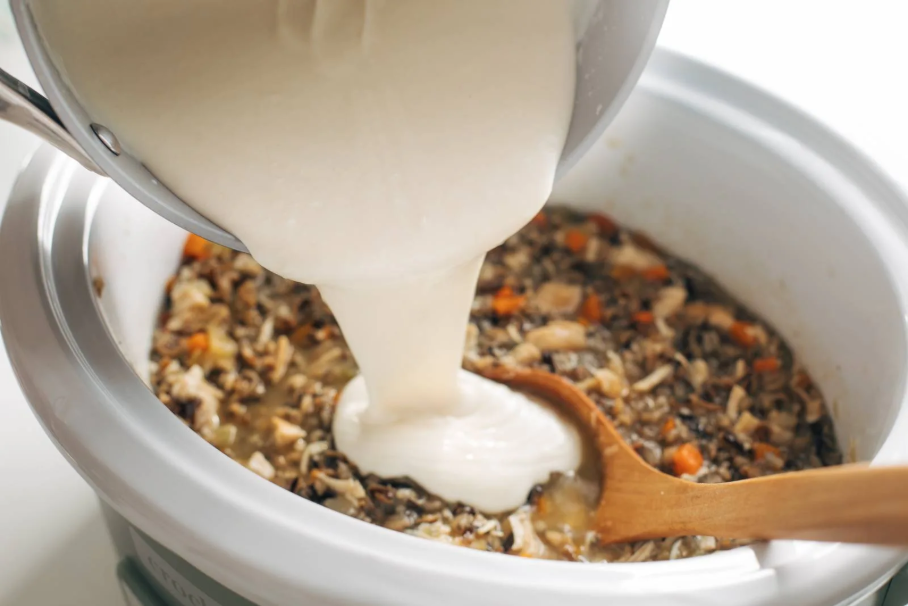
Pour the white sauce and heavy cream into the slow cooker and stir well with everything else in the soup. You’ll see the soup change from a clear pale yellow to a warm milky white, and its texture from thin to thick, with a thin, golden film of oil floating on top. At this point, the soup is no longer just “soup”—it’s something richer, warmer, something you want to hug tightly.
Assembly and Seasoning: The Final Touch
Pour the shredded chicken back into the pot and stir well with the white sauce. The shredded chicken will absorb the richness of the white sauce, becoming moist, flavorful, and transforming from “delicious meat” into “meat you’ll want to lick the plate clean.”
Then taste it. Add salt, add black pepper, until you feel “just right.” The amount of seasoning depends on how salty your chicken broth is, how thick your broth is, and how strong your flavor is. Don’t add too much at once—you can add it gradually while tasting, but it’s difficult to remove excess salt. Be conservative, take your time, until that sip of soup feels perfect.
If you like, you can add a small spoonful of sherry. Not the cloyingly sweet creamy sherry, but dry sherry—the kind with nutty notes and a touch of acidity, reminiscent of a fortified wine from a Spanish bistro. Just a small spoonful is enough; don’t add too much. Its purpose is to make the soup more mature, more complex, and with a surprising twist. But honestly, the soup is delicious enough without sherry—sherry is just an icing on the cake, not a necessity.
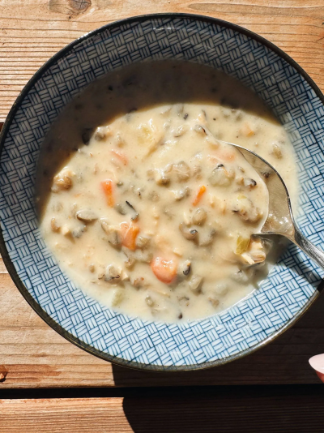
Finally, pour it into a bowl. It’s not a shallow soup bowl, but a deeper one, the kind you can hold in your hands. The soup should be milky white, warm, and slightly shimmering under the light. The black grains of wild rice are scattered like stars in the white broth, shredded chicken floats like clouds, carrot slices curl at the edges, and celery chunks are faintly visible.
How to Eat
Use a spoon. Starting from the rim of the bowl, scoop up a spoonful of soup, making sure the spoon contains wild rice, chicken, and vegetables. Put it in your mouth, first feeling the temperature of the soup with your tongue—it should be warm, but not scalding, just right for a comfortable swallow.
Then chew. The chewiness of the wild rice is the first thing to appear—that satisfying chewing sensation that requires a little effort. Then comes the tenderness of the chicken, melting in your mouth with almost no chewing. The carrots are cooked until soft and easily mashed, releasing their sweetness. The celery retains a slight fibrous texture, contrasting with the chewiness of the wild rice. The rich white sauce coats everything, ensuring every bite is flavorful.
The soup’s flavor is layered: first, the creamy smoothness and buttery aroma, then the rich chicken broth and umami, followed by the nutty notes of wild rice rising from the back of the tongue, and finally, the herbaceous aroma of the poultry seasoning swirling in the nasal cavity. If you add sherry, the nutty and acidic notes emerge at the very end, like a small, delightful surprise.
About halfway through, the ingredients in the bowl begin to meld. The wild rice absorbs more broth, becoming softer and fuller; the shredded chicken and white sauce intertwine, creating a new, somewhere in between; the vegetables infuse the soup, making it more complex and blended. Every spoonful at this point is different from the first—richer, warmer, and more satisfying.
The last few bites are usually the best. The bottom of the bowl holds the essence of all the flavors—the white sauce, the chicken broth, the chicken fat, the starch of the wild rice. Scrape it up with a spoon, and it’s a concentrated, unreserved, and blindingly delicious experience. You’ll want to drink it all, but restrain yourself—save some for the anticipation of the next meal.
Some Random Thoughts
The most captivating aspect of this soup is its complexity hidden within its simplicity. Several main ingredients—wild rice, chicken, vegetables, and white sauce—each do only one thing, but together they create an effect that transcends the sum of their individual components. This is the essence of good cooking: not piling on expensive ingredients, but understanding the potential of each ingredient and then placing them in the right place.
Regarding wild rice, I know some people will find it too expensive or hard to find. But if you live in North America, wild rice is actually quite easy to buy—it’s available in the health food section of most supermarkets, and online everywhere. And a small cup of wild rice can make a large pot of soup, so it’s not expensive in the long run. It’s also highly nutritious—rich in protein and minerals, making it a healthier choice than regular white rice.
Regarding white sauce, I know some people will find making sauce with butter and flour too “old-fashioned.” But white sauce is a foundation of French cooking, and its existence is justified. Butter provides flavor, flour provides thickness, and milk provides texture—together, they create an irreplaceable, reassuring richness. If you’re concerned about calories, use less butter, but don’t substitute low-fat milk for whole milk—low-fat milk will make the sauce thin and lose its velvety texture.
Regarding heavy cream, don’t omit it. I know some people find heavy cream too fattening, but in this soup, only half a cup is needed, enough for four to six servings, so each person only gets a tiny bit. And its role is irreplaceable—that butteriness and smoothness cannot be replicated by milk or half-and-half. If you really don’t want to use heavy cream, you can substitute half-and-half, but the effect will be less perfect.