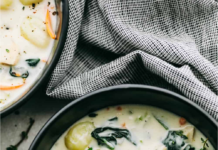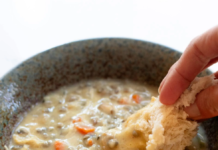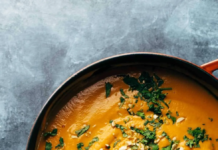
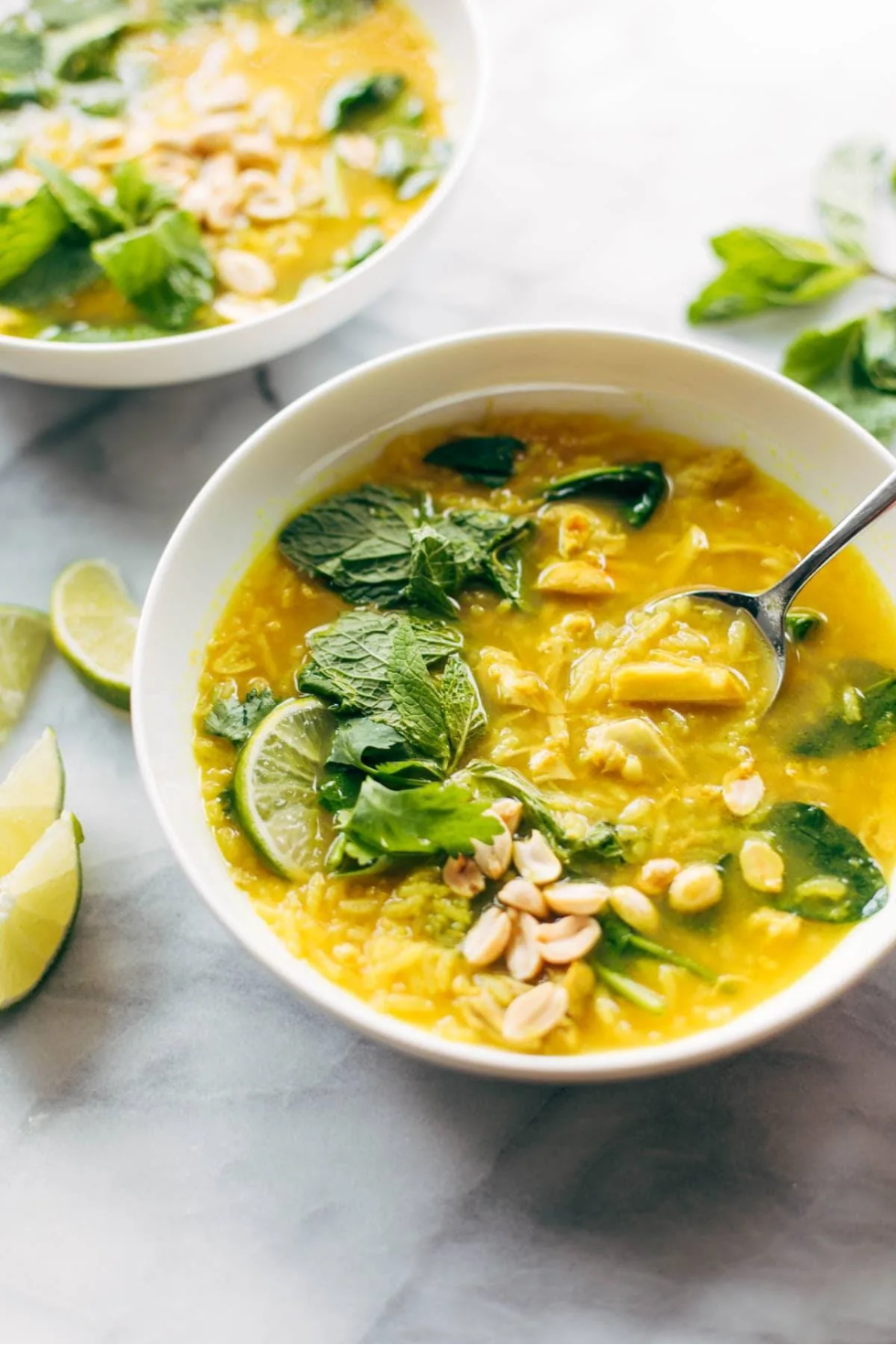
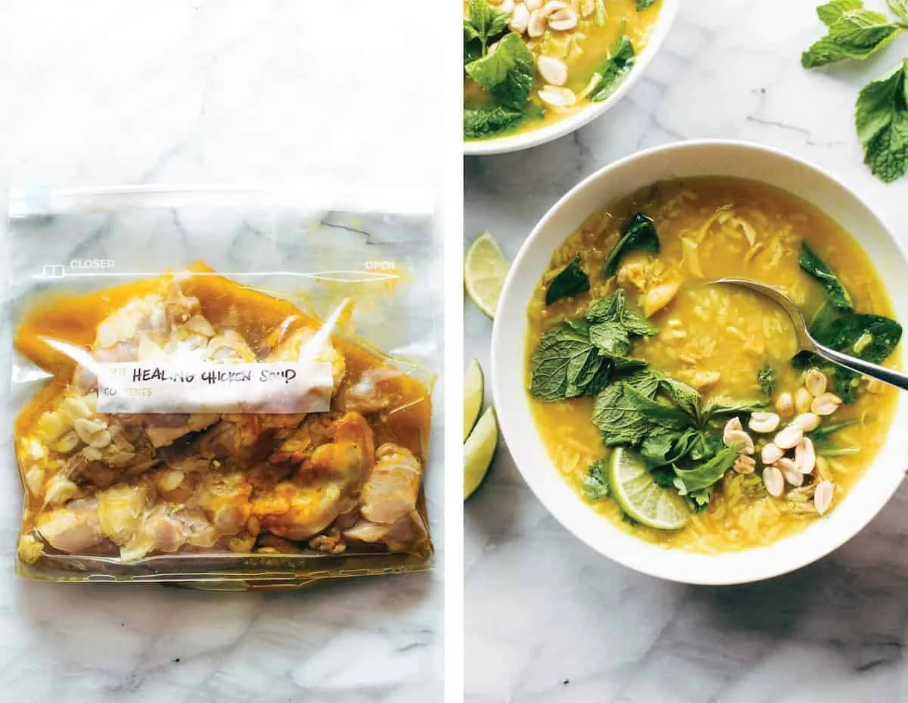
Some foods exist to catch you when you’re at your most vulnerable. Not the kind of elaborate meal that requires you to sit up straight with a knife and fork, but the kind you can curl up on the sofa, holding the bowl in your hands, letting the steam wash over your face. This healing chicken soup rice is like that—it won’t cure your cold, but it will make you feel that the world isn’t so bad on sick days.
The first time I made this soup, I was lying in bed, my nose as stuffy as if filled with cement, my throat as sore as if I’d swallowed a handful of shards of glass. There was a bag of chicken drumsticks, a piece of ginger, and a few limes in the fridge. The delivery time on the food delivery app was fifty minutes, and I was starving. So I dragged my weary body into the kitchen and started chopping the ginger.
About Ginger: The Healing Power of a Root
Ginger is the key ingredient in this soup. Not the ginger powder you use in baking—that dry, soulless powder—but fresh ginger, with its rough skin, pale yellow flesh revealed when cut open, and a root that smells of lemon and pepper. A two-inch piece, about the length of a finger. Peel and slice thinly. Thin slices are better than minced, because they release their flavor slowly as they simmer in the broth, rather than bursting out all at once.
The role of ginger here isn’t spiciness, but warmth. Its warmth isn’t the burning sensation of chili, but a comforting warmth that rises slowly from the stomach, making you want to sigh. When you have a cold, your stomach is cold and contracted, and ginger will soothe it. And ginger has an inexplicable, nasal-clearing magic—not the direct, head-turning coolness of mint, but a gentle, inward-clearing warmth.
Three cloves of garlic, also thinly sliced. Garlic and ginger are a perfect match—garlic provides the depth of umami, ginger provides the warm sharpness. When they meet in hot oil, an irresistible aroma fills the kitchen. It’s not a perfume-like, pleasant scent, but a herbal, reassuring one. It tells you: this pot of soup is useful.
Shallots: The Foundation of Aroma
Shallots aren’t the main character here, but they are an indispensable foundation. Peel and thinly slice a shallot. Shallots are sweeter, milder, and more delicate than regular onions. When sautéed in hot oil, they turn from translucent to a pale gold, their edges curling slightly, releasing a sweet and spicy aroma. This aroma is the foundation of the entire soup—without it, the flavors of ginger and garlic would be too sharp and thin.
Be patient when sautéing shallots. Medium heat, three to five minutes, stirring occasionally, until caramelized spots begin to appear on their edges. Don’t rush, don’t stir-fry over high heat—shallots burn easily, and once burnt, the entire soup will taste bitter. You want a gentle, sweet golden hue, not a harsh, burnt brown.
When shallots, ginger, and garlic meet in the pan, you’ll smell a complex, layered aroma: the sweetness of the shallots, the warmth of the ginger, and the spiciness of the garlic, all intertwined like a trio. At this point, your kitchen begins to have the feel of a pharmacy—not the cold, disinfectant-smelling kind, but the warm, herbal kind that makes you want to take a deep breath.
Chicken Thighs: The Power of Tenderness
The chicken used is boneless chicken thigh meat. Not chicken breast—chicken breast dries out too easily, while chicken thigh meat has fat and connective tissue, which keeps it juicy and tender when cooked in the broth. One and a half pounds of chicken thigh meat, about four to five pieces, is placed directly into the pan and sautéed with the spices for a minute or two to coat the surface with oil and lock in the juices.
Then add chicken broth—six cups, about 1.5 liters. Chicken broth is the backbone of this soup. Don’t use the thin, watery, pale yellow liquid poured from a container. Use a rich, dark broth with a rich, chicken-fat aroma. If you have time, making your own chicken broth is best—chicken bones, carrots, celery, and onions, simmered for three hours, strained, chilled, and skimmed off any scum. But if you don’t have time, store-bought chicken broth is fine—just read the ingredient list carefully, choosing one where chicken is listed first and it’s not diluted with water and salt.
Bring the broth to a boil, then reduce to a simmer, cover, and let the chicken cook slowly in the broth. About fifteen to twenty minutes, depending on your heat and the thickness of the chicken. Don’t overcook—chicken thighs will become tough if overcooked, although they are more resistant to overcooking than chicken breast, there’s a limit. Ideally, the chicken should be able to be easily pierced with chopsticks, but still firm and elastic, not mushy or falling apart at the touch.
After cooking, remove the chicken and let it cool slightly on a cutting board. Then, using two forks, shred it along the grain. The shredding process is satisfying—you’ll see the fibers separate, and the juices seep out from the breaks. The shredded chicken should be fluffy, textured, and each strand should retain its individual shape, not minced meat.
Turmeric: The Secret to That Golden Touch
Turmeric is the finishing touch to this soup. Add a teaspoon of turmeric powder to the pot before adding the chicken broth and sauté with the spices for one minute. This step is called “blooming”—allowing the spices to release their oils and aromas in hot oil, rather than simply adding them to the water. Bloomed turmeric has a richer, more complex, and more layered flavor.
Turmeric gives the soup its color. The color isn’t an artificial, glaring orange-yellow, but a gentle, earthy golden hue, like autumn leaves, like the evening sun, like a bowl of warmth you want to hold in your hands. Turmeric also has a unique, slightly bitter aroma, reminiscent of earth and roots. This aroma isn’t for everyone—some find it too “medicinal”—but in this soup, it’s balanced by the umami of the chicken broth, the tartness of the lime, and the sweetness of the coconut milk, transforming into a comforting, almost maternal flavor.
Don’t forget the black pepper. There’s scientific evidence that curcumin in turmeric needs piperine to aid absorption. So, sprinkling a little black pepper isn’t for spiciness, but to ensure the turmeric’s value isn’t wasted. It’s a clever combination, a little kitchen knowledge, and a small detail you can boast about to your friends after making this dish.
Lime: The Final Sip of Clarity
The lime is the soul of this soup. Not lemons—lemons have a mild, rounded, slightly sweet acidity; limes have a sharp, bright, and invigorating acidity. The juice of four limes, about a quarter cup, is added after the soup has cooked. Not at the beginning—lime juice loses its refreshing acidity and becomes bitter and dull if heated for too long. Add it last, after the soup has removed from the heat but before serving, squeezing the lime juice in and stirring well.
When squeezing the lime, roll it on the table first to loosen the pulp. Then cut it open with a knife and squeeze the juice into the soup with your fingers. Do not strain—the lime pulp and fiber add a layer of texture to the soup, a rougher, more authentic feel reminiscent of fresh fruit. After squeezing, toss the lime zest into the pot for a while—the essential oils from the zest will seep into the soup, bringing a bittersweet aroma.
The lime’s role is to balance. The chicken broth is rich, thick, and makes you want to close your eyes; the lime is refreshing, sharp, and makes you open your eyes. Together, they don’t cancel each other out, but rather complement each other—the chicken broth softens the lime’s prickliness, and the lime softens the chicken broth’s richness. This is a classic, cross-cultural pairing: Southeast Asian Tom Yum, Mexican Pozole, and Greek Avgolemono all use acidity to balance richness. This soup is no exception.
Jasmine Rice: The Gentle Base
Rice here isn’t a side dish, it’s the base. Without it, this dish is just a pot of soup and a few pieces of meat. With it, everything becomes complete, substantial, and like a meal.
Use jasmine rice. Not the sticky, short-grain kind, nor the dry, long-grain kind, but the kind that cooks with distinct grains and a subtle floral aroma. One cup of rice, one and a half cups of water, cook according to package directions. After cooking, gently separate the rice grains with a fork, ensuring each grain is independent and loose.
The rice should be cooked separately, not added directly to the soup. This is because the rice absorbs the broth; adding it directly will thin the soup, losing its rich, creamy texture, while the rice will become too soft and mushy. Place the separately cooked rice at the bottom of the bowl, then pour the hot soup and shredded chicken over it. This way, each bite offers a delightful interplay of textures: the soft, sticky rice, the tender meat, and the rich broth.
Furthermore, cooking the rice separately allows you to control the consistency of the soup. Add more soup if you prefer more, less if you prefer it drier. The proportions in the bowl are determined by you, not by the ingredients in the pot. This freedom is the charm of assorted eating.
Spinach: The Final Touch of Green
Spinach is the finishing touch to this soup. Three cups of tender spinach are added directly to the pot after the soup is removed from the heat and before serving. Do not boil—the residual heat will partially cook the spinach, preserving its crisp, grassy texture. Overcooked spinach shrinks, softens, and loses its color, turning into a dark, unappetizing clump of mush. Partially cooked spinach is vibrant green, retains its shape, and offers a crisp texture with every bite.
Spinach is more than just color. It provides a refreshing, slightly bitter, and invigorating flavor that balances the richness of the chicken broth and the earthy aroma of turmeric. Moreover, the tender, smooth spinach contrasts with the grainy texture of the rice and the fibrous texture of the chicken. Every sip of soup should contain a few pieces of spinach, like a small, unexpected delight.
If you don’t like spinach, you can substitute kale or Swiss chard. However, kale needs to be cooked longer, otherwise it will be too tough; the stems of Swiss chard should be removed, otherwise they will be too coarse. Spinach is the simplest and most forgiving choice—it requires no pretreatment, just tossed into the pot at the end and gently blanched by the residual heat.
Assembly: A World in a Bowl
The assembly has an order, though not strictly strict, but logical. The bottom layer is hot rice, like a white canvas. Then comes shredded chicken thigh meat, generously layered on top, ensuring every piece has its place in the bowl. Next comes the broth—not poured, but poured, like drizzling sauce, starting from the center and working outwards in circles, evenly covering the rice and chicken.
The amount of broth is crucial. Too much will turn the bowl into a soupy mess, the rice losing its texture; too little will make the bowl dry, losing the soul of “soup rice.” The ideal amount is: broth covering the rice and chicken, but not too much liquid at the bottom. With each spoonful, the rice is moist but not soaked in water; the chicken is submerged in the broth but not floating.
Then comes the garnish. Fresh herbs—mint, cilantro, and basil—are chopped together and sprinkled on top of the soup. The coolness of the mint, the spiciness of the cilantro, and the sweetness of the basil intertwine like a trio. They’re not just decorations; they’re essential—without them, the bowl would be too heavy, too rich, too suffocating.
Finally, there are crushed peanuts. Not whole, but coarsely chopped, slightly salty roasted peanuts. Their purpose is to provide a contrast in texture—the soup is soft, the rice is soft, the chicken is soft, while the peanuts are crunchy, firm, the kind that makes a slight “crunch” when you bite into them. They transform the bowl from “a bowl of soup” into “a bowl of something with layers.”
If you like, you can add a spoonful of fish sauce or soy sauce. The saltiness and umami of the fish sauce and the fermented umami will make the soup taste deeper and more complex. The savory and sweet flavor of the soy sauce will make the soup more rounded and full-bodied. Neither of these is mandatory, but they are options—the freedom to adjust according to your mood and taste.
When Eating
Use a spoon. Not a fork, not chopsticks, but a spoon—the deep kind of soup spoon that can scoop up rice, chicken, and soup at once. Start with the rim of the bowl, scooping up a little rice, a sliver of chicken, and enough soup. Put it in your mouth, first feeling the temperature of the soup with your tongue—it should be warm, but not scalding, just right for a comfortable swallow.
Then chew. The soft, sticky rice, the tender chicken, and the crunchy peanuts alternate in your mouth. The soup is rich, complex, slightly sweet, slightly sour, and warm with a hint of ginger. The coolness of mint rises from your nasal cavity, the tartness of lime spreads from the back of your tongue, and the oily aroma of peanuts emerges at the end of the chewing process.
Towards the middle, the ingredients in the bowl begin to meld. The broth seeps into the rice, infusing every grain with flavor; the chicken fibers intertwine with the rice, creating a new, somewhere between the two textures; the spinach, softened by the blanching, transforms from crisp to smooth, blending seamlessly with the rice. Each spoonful at this point is different from the first—more integrated, richer, and more satisfying.
The last few bites are usually the best. The bottom of the bowl holds the essence of all the flavors—chicken broth, lime juice, the earthy aroma of turmeric, the salty umami of fish sauce. Scraping it up with a spoon is a concentrated, unreserved, and irresistibly delicious experience. You’ll want to drink it all, but restrain yourself—save some for the anticipation of the next meal.
Some Random Thoughts
The most captivating aspect of this soup is its complexity hidden within its simplicity. The main ingredients—chicken, ginger, garlic, lime, and turmeric—each do only one thing, but together they create an effect that transcends the sum of their individual components. This is the essence of good cooking: not piling on expensive ingredients, but understanding the potential of each ingredient and then putting them in the right place.
Regarding chicken thighs, I know some people find deboning troublesome. But if you buy ready-made boneless chicken thighs, this isn’t an issue. Boneless chicken thighs are also easier to shred than bone-in thighs because the meat is whole and free of bones. If you only have bone-in thighs, you can remove the meat from the bones after cooking, but it will take a few more minutes.
Regarding limes, they must be fresh. Bottled lime juice is sour, but it lacks that refreshing, invigorating aroma. Fresh lime juice contains essential oils, and that aroma is something bottled juice can’t replicate. Moreover, the process of squeezing a lime is therapeutic in itself—the feeling of squeezing hard and watching the juice gush out is like squeezing out toxins from your body.