
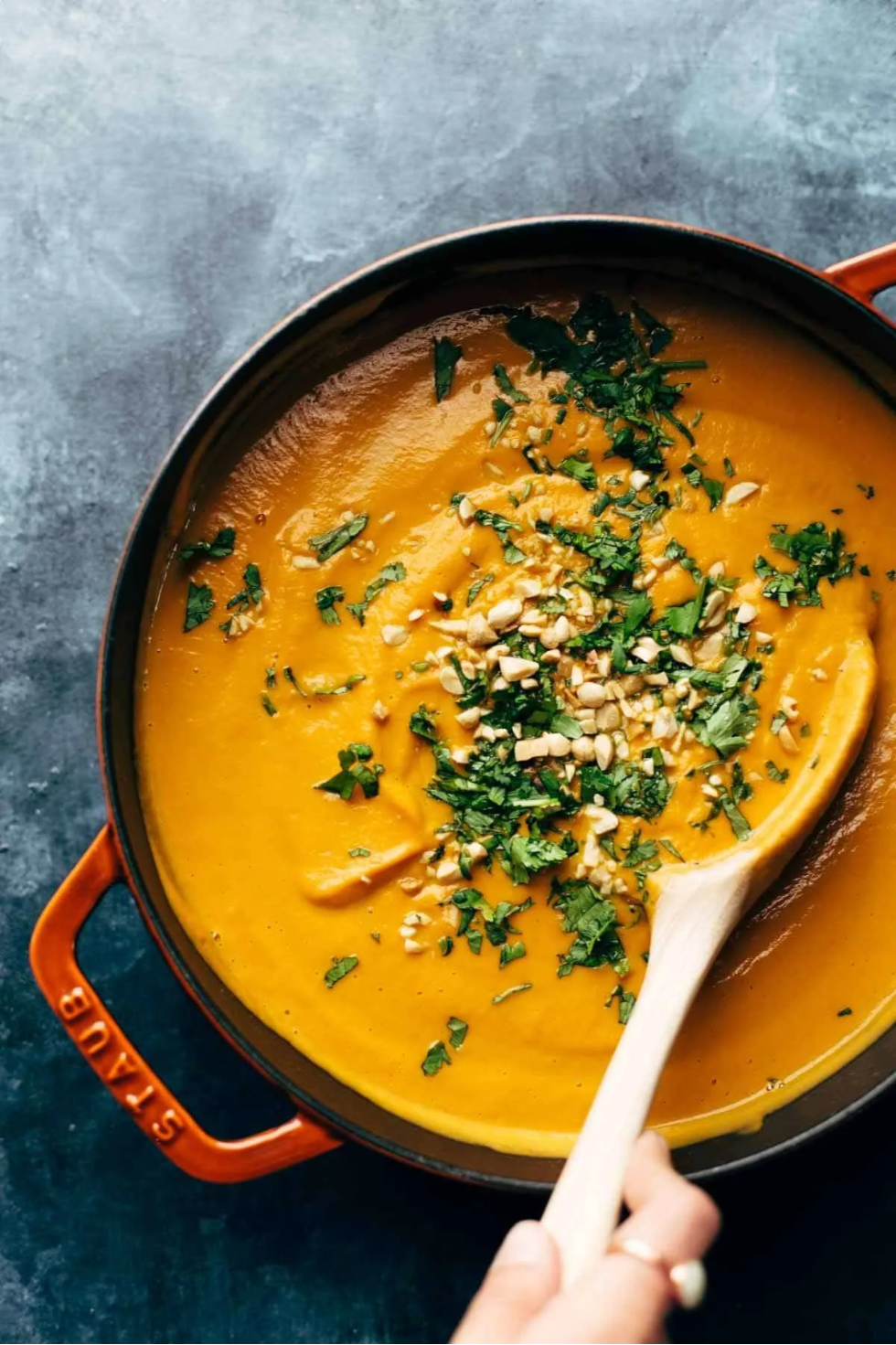
Some foods exist to remind you that simple things can be wonderful. This carrot soup is just that—its ingredient list is so short you could recite it with your eyes closed: carrots, onions, ginger, garlic, and coconut milk. No expensive ingredients, no complicated techniques, and you don’t even need to stand by the stove for long. But when you put the last spoonful in your mouth, you’ll understand: sometimes, less is more. And much more.
The first time I made this soup, it was raining outside. It was the kind of light, persistent autumn rain, pattering against the window. There was only a bag of carrots, half an onion, and a piece of ginger left in the fridge. I was planning to order takeout, but the delivery time on the app was 45 minutes. I figured by the time the delivery arrived, the soup would be ready. So I started peeling the carrots.
About Carrots: Each Orange Sprout a Humble Gem
Carrots are an underrated vegetable. They’re so common that we barely glance at them when we pass by in the supermarket. It’s not as slender and elegant as asparagus, nor as vibrantly colored as a tomato, nor does it carry the mysterious scent of a forest like mushrooms. It’s simply an orange, robust root with an earthy flavor. But it’s precisely this humility that makes it the best ingredient for soup.
The sweetness of carrots is restrained and subtle. Eaten raw, it’s crisp and slightly spicy; cooked, it becomes soft and mellow, its sweetness slowly releasing, like an introverted person finally opening up to a familiar friend. Two pounds of carrots—about eight to ten—cut into pieces about two centimeters in size. Don’t cut them too finely, as they’ll be pureed anyway. But don’t cut them too coarsely either, otherwise they’ll take too long to cook, and uneven sizes will result in undigested lumps in the soup.
Whether to peel them or not is up to you. If you’re using organic carrots and don’t mind a little earthiness, you can cook them with the skin on—carrot skin is full of nutrients, and once softened, it’s barely noticeable when pureed. But if you’re buying regular supermarket carrots, or if you’re picky about texture, peeling is a safer option. I usually peel them, not for the taste, but because the process slows me down. In this fast-paced world, peeling carrots is a rare, legitimate moment to slow down.
Onions and Ginger: The Foundation of Aroma
Onions form the base of this soup. A medium-sized yellow onion, coarsely chopped. They don’t need to be perfectly chopped; they’ll all end up in the soup anyway. Onions undergo a wonderful transformation when sautéed in hot oil: they go from pungent to mild, from translucent to golden, from pungent to sweet. This transformation takes three to five minutes, depending on your heat and patience. Don’t rush it; let the onions sit quietly in the pot, stirring occasionally, until caramelized spots begin to appear on their edges.
Then comes the ginger. Not ginger powder, but fresh ginger—the kind with a rough skin, pale yellow flesh revealed when cut open, and a aroma of lemon and pepper. The role of ginger here isn’t spiciness, but warmth. Its warmth isn’t the burning sensation of chili peppers, but a comforting warmth that slowly rises from the stomach, making you want to sigh. Two tablespoons of chopped ginger, about the size of a thumb. If you particularly like the taste of ginger, add more; if you’re unsure, start with one tablespoon, taste it, and then decide whether to add more.
Finally, garlic. Two cloves, chopped. Garlic is a supporting role here, but it cannot be omitted. It provides the soup with a base umami, an indescribable depth that makes the other flavors more complete. Add the garlic and ginger to the pot and sauté for one minute, until the kitchen is filled with that undeniable, warm, slightly spicy aroma. At this point, your kitchen begins to smell like home.
Turmeric: The Secret to That Golden Touch
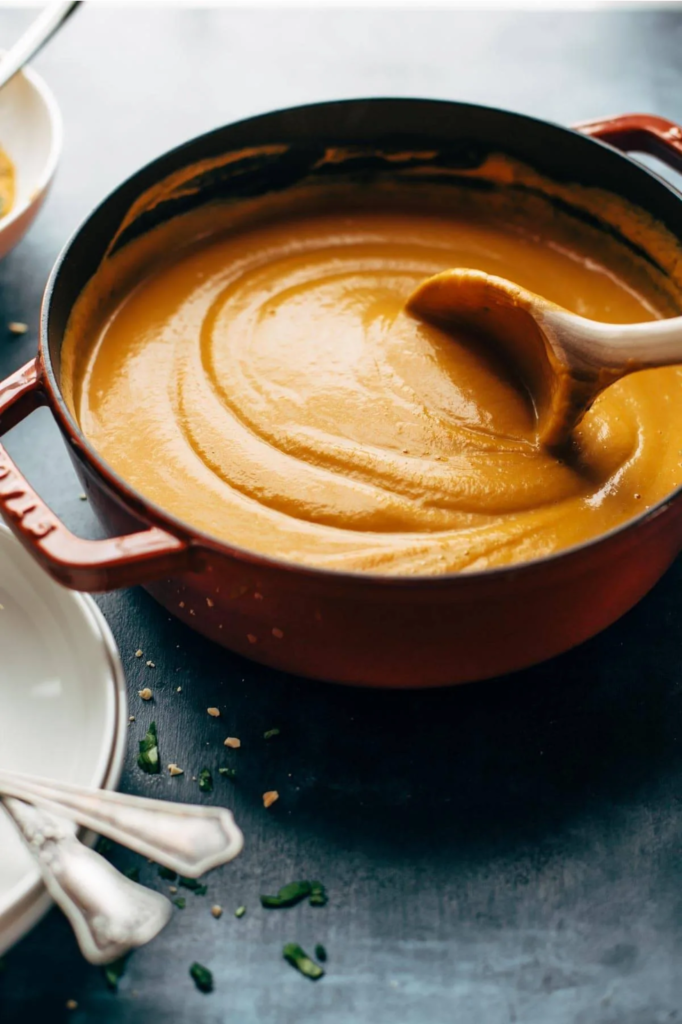
Turmeric is the finishing touch to this soup. Not because of its strong flavor—in fact, a small spoonful of turmeric is quite mild, almost masked by the carrots and coconut milk—but because it gives the soup its color. The color isn’t an artificial, glaring orange-yellow, but a gentle, earthy golden hue, like autumn leaves, like the evening sun, like a bowl of warm soup you want to hold in your hands.
The health benefits of turmeric have been talked about to death—anti-inflammatory, antioxidant, immune-boosting. I’m not going to repeat those here. What I want to say is that turmeric makes this soup look more appetizing. We eat with our eyes, that’s a fact. A dull-colored soup, no matter how good it tastes, will psychologically diminish your enjoyment; a bright-colored soup, no matter how ordinary the taste, will fill you with anticipation before the first sip. That’s what turmeric does—it makes the soup visually appealing.
But don’t forget the black pepper. There’s scientific evidence that curcumin in turmeric needs piperine to help with absorption. So, sprinkling a little black pepper isn’t for spiciness, it’s to ensure the turmeric’s value isn’t wasted. It’s a clever combination, a little kitchen knowledge, and a small detail you can show off to your friends after making this dish.
Coconut Milk: The Magic That Soup Becomes Smoother
Coconut milk is the turning point in this soup. Before adding it, it was just a pot of softened vegetables and broth—delicious, but nothing special. After adding the coconut milk, everything changed. The soup became thick, silky, and creamy, but without the greasiness of cream. It’s dairy-free, vegan, and a blessing for lactose intolerant people, yet it tastes like a thick soup with lots of cream.
Use canned full-fat coconut milk. Not the kind in cartons, but the kind you find in the Asian section, the kind that you can hear sloshing around when you shake it, the kind where the fat separates and solidifies. One can is about 400 ml. When you open the can, you’ll see a thick layer of creamy white cream on top, followed by a thinner liquid. Pour them all in and stir well. The cream layer melts during heating, blending seamlessly with the soup and giving it a velvety texture.
The sweetness of coconut milk and carrots are different in nature. Carrot sweetness is plant-based, fresh, and slightly earthy; coconut milk sweetness is creamy, rounded, and makes you want to close your eyes. Together, they don’t simply layer, but complement each other—the carrots make the coconut milk less cloying, and the coconut milk makes the carrots less monotonous.
Cooking and Blending: The Metamorphosis from Solid to Liquid
Add the carrot chunks to the pot and sauté for a minute or two with the onion, ginger, garlic, and turmeric, coating the carrots with oil. Then add broth. Four cups of broth—chicken or vegetable broth will do. Chicken broth will make the soup richer and more meaty; vegetable broth will make it lighter and purer. I usually use vegetable broth because this soup is already rich enough and doesn’t need chicken broth to add complexity. But if you only have chicken broth on hand, that’s perfectly fine too.
Bring it to a boil over high heat, then reduce to a simmer, cover, and cook for fifteen minutes. During these fifteen minutes, you can do anything—wash the dishes, check emails, or just sit by the window and daydream. The broth will cook on its own; you don’t need to worry about it. Occasionally, lift the lid to peek, and you’ll see the carrot chunks soften in the broth, changing color from bright orange to a deeper orange-red, and tiny bubbles will begin to rise to the surface.

After fifteen minutes, the carrots should be soft enough to be easily mashed with a spoon. At this point, take out your immersion blender, insert it directly into the pot, and start blending. This is the most satisfying moment—watching the chunks of carrot, onion, and ginger slowly disappear as the blender spins, transforming into a smooth, thick, silky liquid. Move the blender around while blending to ensure the bottom and sides of the pot are also blended. In about two minutes, the soup will become as smooth as melted ice cream.
If you don’t have a hand blender, a regular blender will do. However, pour the soup in in batches, and leave a small gap in the lid to allow steam to escape. Hot soup in a sealed blender can create pressure that could force the lid off, causing disastrous consequences. This is one of the most painful lessons I’ve learned in the kitchen, and hopefully you won’t have to experience it yourself.
Lime: The Final Clarity
After blending the soup, add the coconut milk and stir well. Then comes the crucial final step—add lime juice. Not lemon juice, but lime juice. The acidity of a lime is sharper, brighter, and more penetrating than that of a lemon. It’s like a tiny knife, cutting a slit in the thick soup, bringing all the flavors to life.
Squeeze about one tablespoon of lime juice from half a lime. Before squeezing, roll the lime on the table to loosen the pulp, making it easier to extract the juice. After squeezing the lime, rub the essential oil from the peel into the soup with your fingers—the slightly bitter aroma will add another dimension to the flavor.
Take a sip. At this point, the soup should be rich, smooth, slightly sweet, slightly sour, and with a hint of ginger warmth. If it’s too concentrated, add a little broth or water to dilute it; if it’s too weak, add a little salt; if it’s not sour enough, add a little more lime juice. Seasoning is a gradual process, not a one-time decision. You need to taste and adjust until that sip makes you feel, “This is it.”
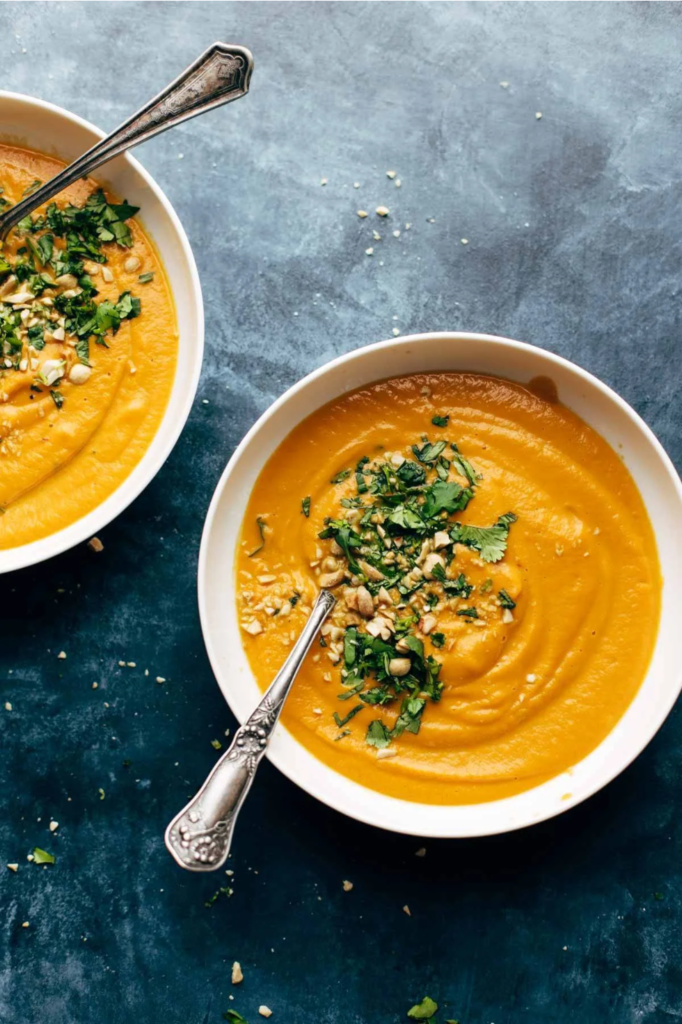
Pour it into a bowl. Not a shallow soup plate, but a deep bowl that you can hold in your hands. The soup should be golden, warm, and slightly shimmering under the light. You can drizzle a small circle of coconut milk on top and use a toothpick or chopsticks to draw a spiral pattern—not for aesthetics, but to give the first sip both the richness of the soup and the lightness of the coconut milk.
Then sprinkle with chopped cilantro. It’s not just for decoration, it’s essential. The freshness of cilantro contrasts with the richness of the soup, its green with the golden broth, its crunch with the smoothness. Every sip should contain a touch of cilantro, like a delightful little surprise.
If you prefer a crunchier texture, add a handful of roasted cashews or peanuts. They won’t soften in the soup but will retain their slight crunch, contrasting with its smoothness. Or add some fried shallots—those crisp, golden, onion-sweet fried treats. They transform this soup from “a bowl of soup” into “a bowl of something with layers.”
Halfway through, the temperature in the bowl will drop slightly, and the flavors will become softer and more integrated. At this point, the soup is different from the first sip—more rounded, fuller, and more inviting. The last few sips are usually the best, as the essence of all the flavors accumulates at the bottom of the bowl—coconut milk, lime juice, the sweetness of carrots, and the earthy aroma of turmeric. Scrape it up with a spoon, and you’ll taste a concentrated, unreserved, and irresistibly delicious flavor.
The most captivating aspect of this soup is its complexity hidden within its simplicity. Five main ingredients—carrots, onions, ginger, coconut milk, and lime—each do only one thing, but together they create an effect that transcends the sum of their individual components. This is the essence of good cooking: not piling on expensive ingredients, but understanding the potential of each ingredient and then placing them in the right place.
Regarding coconut milk, be sure to use full-fat. Low-fat coconut milk will make the soup thin and lose that rich, creamy texture. The fat in full-fat coconut milk gives the soup a velvety texture, making it smooth, full-bodied, and irresistible. If you’re worried about calories, drink half a bowl less, but don’t compromise the texture with low-fat coconut milk.
Regarding turmeric, I know some people worry about its staining properties—cutting boards, fingers, even clothes can get stained yellow. That’s true. But that’s part of turmeric’s charm—its effects are temporary, but the flavor of the soup is eternal. If you’re really worried, you can wear gloves when handling turmeric, or add turmeric powder directly to the pot instead of fresh turmeric. However, fresh turmeric has a more complex and layered flavor, and if you can find it, it’s worth a try.
I make this soup at the end of autumn. Not because it’s exclusive to autumn—it can actually be made year-round—but because at the tail end of autumn, carrots are at their sweetest, ginger is at its most flavorful, and I don’t want to spend too much time in the kitchen. This soup only takes thirty minutes, fifteen of which are spent simmering in the pot, and you only need to stand by the stove for about ten minutes.
When you sit at the table with a bowl in hand, spooning a ladleful of golden soup, with perhaps a few last leaves falling outside the window, you’ll remember that afternoon when you decided to make a pot of soup with the leftover carrots in the fridge. Back then, you thought it was just a stopgap measure. Now you know it’s something better—it’s a discovery, a rediscovery of simple ingredients, the simplest and most profound magic in the kitchen.
And it’s really delicious. So delicious that you’ll want to make it again and again. So delicious that on a cold afternoon, you’ll suddenly remember its taste, walk into the kitchen, and start peeling carrots.